

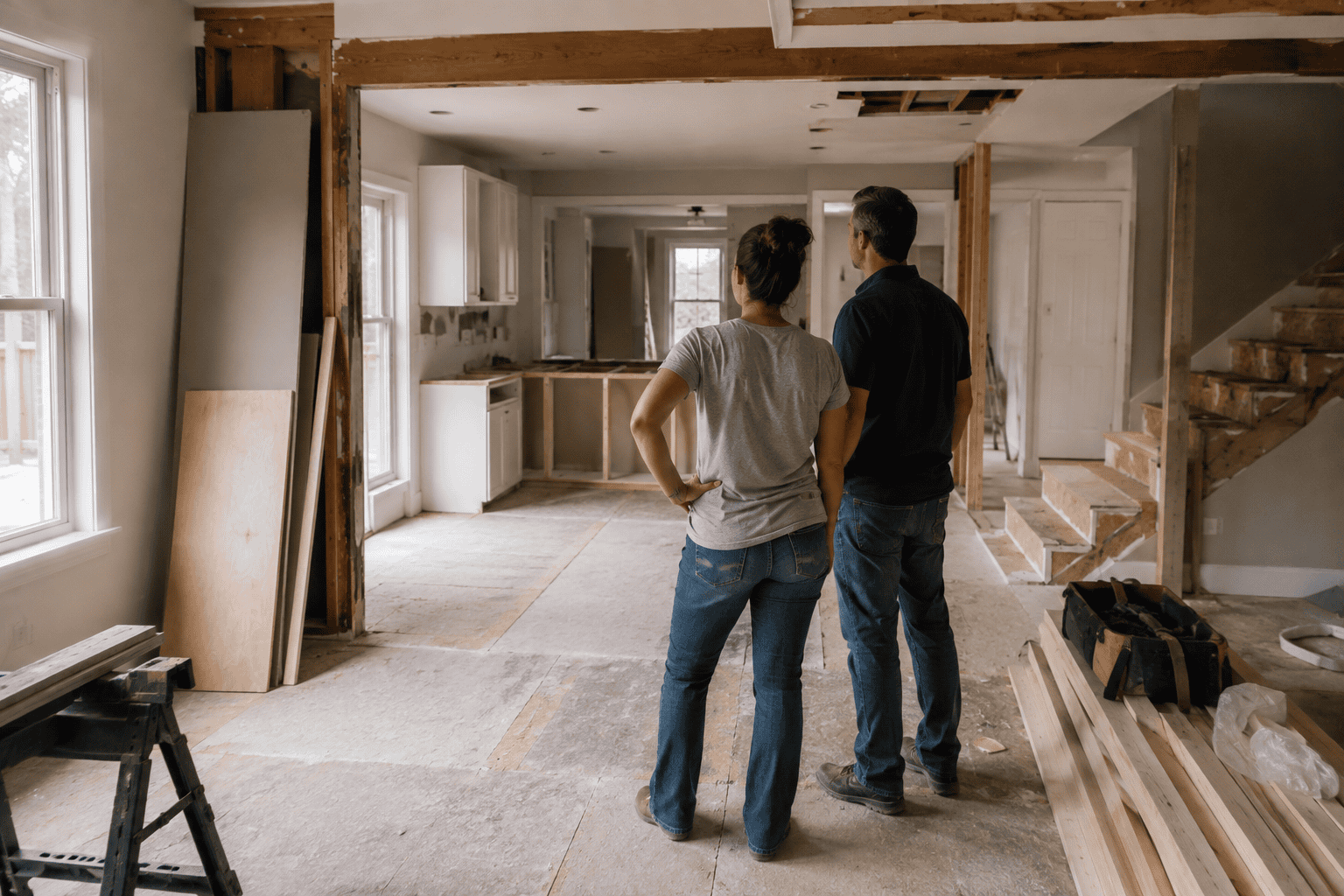
A few years ago, outgrowing your house meant listing it. Now it usually means calling a contractor.
That shift is not a design trend. It is arithmetic, and once you see the numbers behind it, the way you think about your own house changes too.
The Math That Is Keeping People Put
Freddie Mac put the average 30-year fixed mortgage rate at 6.67 percent in mid-August 2026. Meanwhile, roughly half of all outstanding US mortgages still carry a rate below 4 percent, and about two thirds sit below 5 percent, according to federal mortgage database figures.
Read those together and the problem is obvious. Moving does not just mean a new house. It means trading a cheap loan for an expensive one, on a pricier property.
Researchers at the Federal Housing Finance Agency put a figure on it. Their 2024 working paper estimated that rate lock-in prevented roughly 1.33 million home sales between mid-2022 and the end of 2023, and that every percentage point the market rate sits above your existing rate cuts the odds you sell by about 18 percent.
You can see it in the sales data. Existing home sales were running around 4.06 million annualized in July 2026, against 6.12 million in 2021. And the National Association of Realtors reported that the typical seller in 2025 had been in their home 11 years, an all-time high.
Staying Changes What Is Worth Doing
Here is the part most improvement advice gets wrong. If you are moving in three years, you renovate for the next buyer. If you are staying eleven, you renovate for yourself.
That is a completely different project list, and the spending data reflects it. Harvard’s Joint Center for Housing Studies puts annual owner-occupied improvement and repair spending at roughly $517 billion, and its researchers describe owners as locked in place, more likely to take on work that supports living in the same house longer.
The industry side agrees. The National Association of Home Builders’ Remodeling Market Index has stayed positive for 24 consecutive quarters, with its chief economist pointing to rising homeowner equity and an aging housing stock as the drivers. It also explains why the renovation decisions homeowners appreciate years later tend to be about light, layout and storage rather than finishes.
Aging housing stock is not an abstraction in New York. This state has the oldest owner-occupied housing in the country, with a median age around 64 years against a national median of 42. If your house was built before Kennedy took office, it was insulated to a standard nobody would accept today.
A Redfin survey fielded in late 2025 found that 65 percent of homeowners who had recently renovated chose to upgrade rather than relocate. Survey data, so treat it as directional, but it matches everything above.
Start With the Envelope, Not the Kitchen
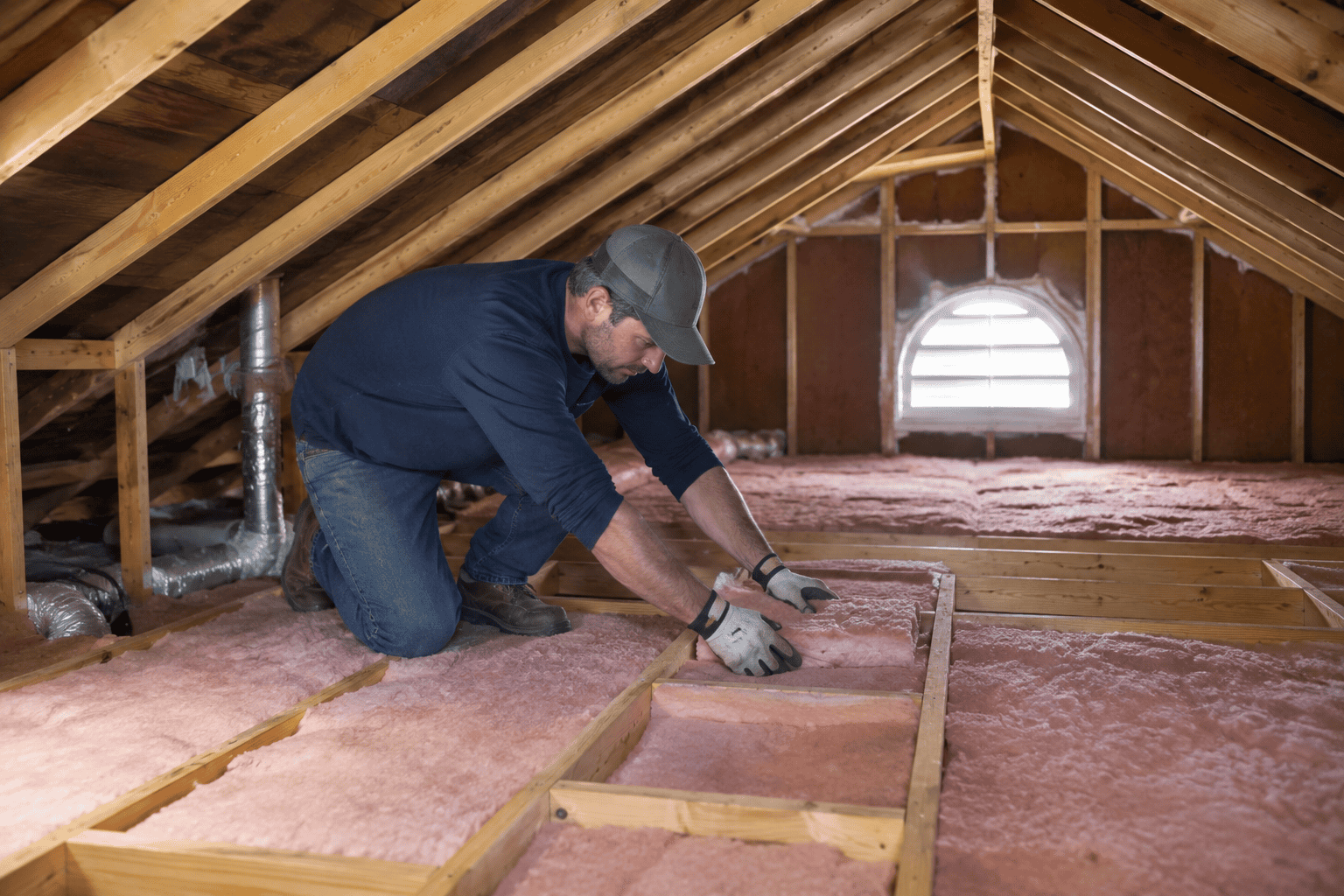
When the plan is to stay, comfort and running costs matter more than a resale photograph. That puts insulation and air sealing at the front of the queue, which is not where most people start.
ENERGY STAR estimates that air sealing and adding insulation in attics, crawlspaces and accessible rim joists saves homeowners an average of 15 percent on heating and cooling and 11 percent on total energy costs. In a Rochester winter, that is not a rounding error.
There is also a gap worth knowing about. Monroe County sits in climate zone 5, where ENERGY STAR recommends R60 in an uninsulated attic, while New York’s energy code sets the prescriptive ceiling minimum at R-49. Code is a floor, not a target, and most older local homes are nowhere near either number, which is worth raising early with any insulation contractors you bring in to quote.
Because insulation is one of the few materials you install and then breathe around for decades, it is also worth asking what is actually in it. Homeowners looking at non toxic home insulation tend to be reacting to real issues rather than imagined ones, and a few facts help sort the marketing from the substance:
- Residential fiberglass has been formaldehyde-free in the US and Canada since around 2015, so that particular worry is largely settled for new product.
- Mineral wool is not a blanket answer. Some standard lines still use a phenol formaldehyde binder, and only specific product lines are made without added formaldehyde. Ask for the data sheet on the exact product, not the brand.
- Spray polyurethane foam is where the real safety questions live. The EPA has described isocyanates as a leading chemical cause of work-related asthma, and is explicit that it is not clear how much time is needed after application before it is safe for occupants to re-enter. If you go this route, use a professional and follow the manufacturer’s ventilation and re-entry guidance closely.
- Cellulose is treated with borates for fire and pest resistance and is regulated under a federal safety standard covering flame resistance and corrosiveness.
- Sheep wool, hemp and cork are genuinely interesting, but independent code and emissions documentation is thinner than for mainstream materials. Ask for an ICC-ES report or a Declare label rather than taking a website’s word for it.
Two certifications are worth recognising. GREENGUARD Gold tests what actually comes out of a finished product, restricting emissions of more than 360 VOCs. Declare tells you what went into it. They answer different questions, so a product carrying both is telling you more than one carrying either.
Do Things in the Right Order
Sequence is where improvement budgets get wasted, and the envelope is a good example. Insulating an attic means burying the underside of your roof under a foot of new material, which is a poor moment to discover the roof is leaking.
ENERGY STAR is direct about this. Its attic insulation guidance tells homeowners to stop and bring in a professional first if they find wet or damp insulation, moldy or rotted rafters, little or no attic ventilation, or a history of ice dams. All four are common in older local housing.
So a roof inspection belongs before the insulation quote, not after it. A proper one covers the roof covering, gutters, downspouts, flashing, skylights, chimney and every other penetration. Worth knowing what it does not include: standard home inspection practice does not require anyone to walk the roof surface, predict remaining service life, or warrant its condition, which is why a roofer’s evaluation is a different thing from the roof section of a general inspection. Marketplace pricing in 2026 put the national average around $250. If it turns up more than a repair, the factors that impact roof replacement costs are worth understanding before you take bids.
There is an insurance reason too. The Insurance Information Institute notes that most insurers require an inspection once a roof passes 20 years, and that older roofs may be covered at actual cash value rather than replacement cost, meaning depreciation comes off your payout. Knowing your roof’s age and condition is worth something regardless of what you build next.
What Still Returns Money If You Do Sell

Staying put does not mean ignoring value entirely, and the ranking of the most valuable home renovations holds a useful surprise. The most recent Cost vs. Value data, released September 2025, found the winners are almost all small and external:
- Garage door replacement, around 268 percent of cost recouped
- Steel entry door replacement, around 216 percent
- Manufactured stone veneer, around 208 percent
- Minor kitchen remodel, around 113 percent
The pattern repeats year after year. Cheap exterior work outperforms expensive interior work, and the more complex the project, the worse the return. Those are national averages, so treat them as direction rather than a forecast for your street.
Which is the useful conclusion if you plan to stay a while. Chase resale value and you end up with a short list of modest exterior swaps. Plan around living there instead, and the money goes into comfort, running costs and space that works, with resale as a bonus rather than the brief.
Improving Beats Moving When the Plan Is to Stay
The market conditions pushing people toward improvement are unlikely to reverse quickly. Half the country is sitting on a mortgage rate it cannot replace, and the houses those people are sitting in are old, particularly here.
The homeowners getting the most out of it are the ones treating it as a plan rather than a series of reactions. Establish the condition of the roof and the envelope first, spend on what you will feel every day, and get the order right so you are not paying twice for the same square footage. When you are ready to price the work, the RHBA member directory is the place to find a pro who works in Monroe County.