

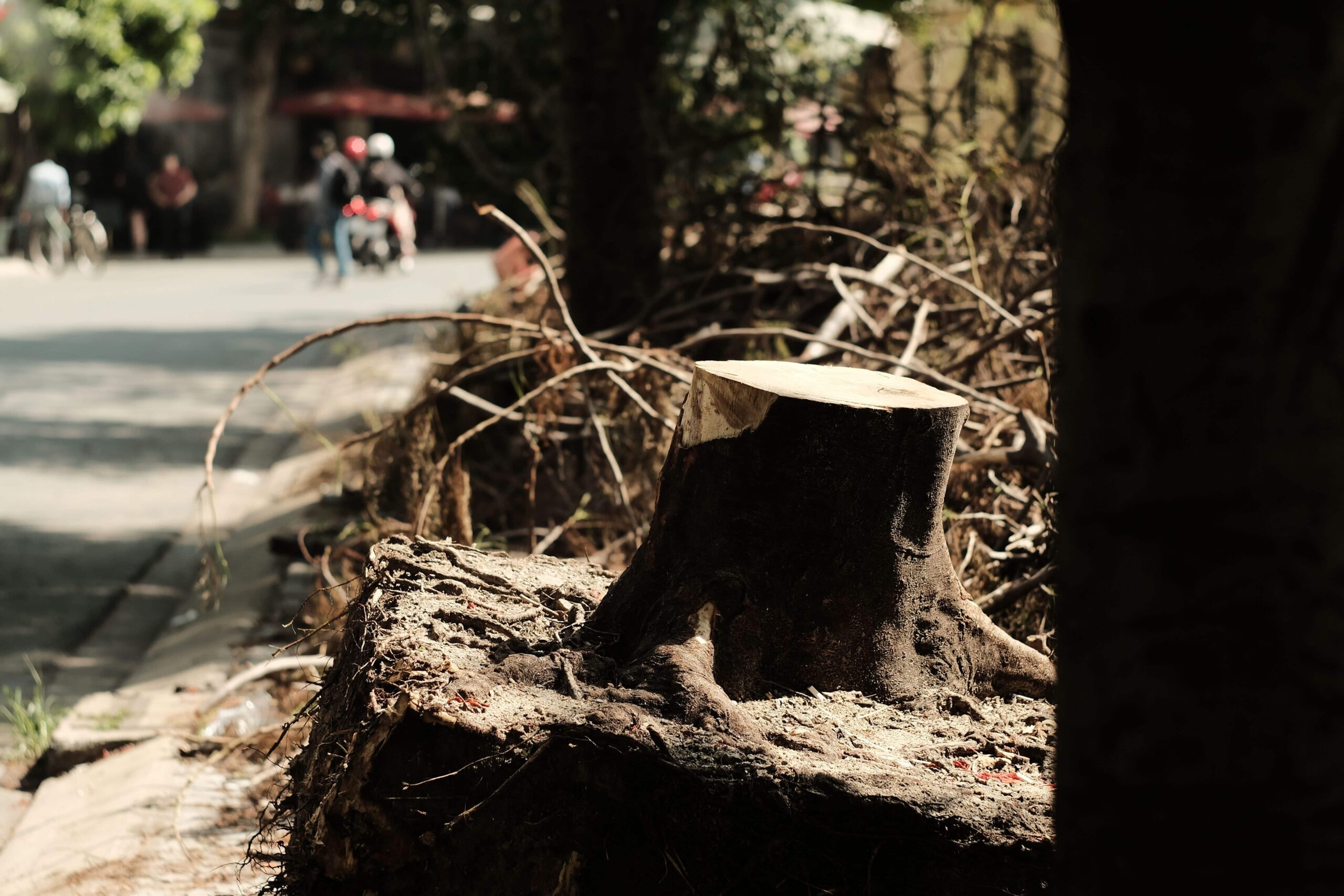
After a tree has been cut down, the remaining stump can create challenges for homeowners planning to maintain or improve their outdoor spaces. Tree stumps may interfere with lawn mowing, restrict landscaping options and create obstacles in areas used for walking or recreation. While some homeowners choose to leave stumps in place, others prefer to have them removed to create a more practical and accessible garden. Two common approaches are stump grinding and complete stump removal. Although both methods address unwanted tree stumps, they involve different processes and can produce different results.
Choosing between stump grinding and stump removal depends on several factors, including the size of the stump, surrounding structures, underground services and future plans for the area. Grinding reduces the stump below ground level, while complete removal involves extracting the stump and a substantial portion of its root system. Homeowners exploring Forest Tree Service stump grinding can learn more about how professional equipment is used to manage unwanted stumps. Understanding the differences between these methods can help property owners choose an approach that suits their landscaping requirements, available space and budget.
Understanding Why Tree Stumps Need Attention
A tree stump may appear harmless after the surrounding branches and trunk have been removed, but it can affect how a garden is used and maintained. Stumps positioned in lawns may obstruct mowing equipment, while those near pathways or outdoor entertaining areas can create tripping hazards. They can also limit where homeowners install garden beds, paving, fencing or other landscaping features.
Over time, dead stumps gradually decompose, although the process can take years depending on the tree species, stump size and environmental conditions. Decaying wood may provide habitat for fungi, insects and other organisms involved in natural decomposition. This does not mean every stump will cause a pest problem, but its presence may be undesirable in certain locations. Some living stumps can also produce new shoots, particularly when the original tree species is capable of regenerating from its roots. Whether a stump needs attention depends on its location, condition and the homeowner’s intended use of the surrounding space.
How Professional Stump Grinding Works
Stump grinding involves using specialised machinery fitted with a rotating cutting wheel to break down the visible stump into small wood fragments. The operator gradually moves the cutting wheel across the stump, reducing the timber until it reaches the required depth below the surrounding ground level. The depth depends on the equipment, site conditions and intended use of the area.
One advantage of stump grinding is that it generally causes less ground disturbance than excavating the entire stump. Most of the surrounding root system remains underground, allowing the area to be restored without removing large quantities of soil. The grinding process produces wood chips that may be collected, removed or managed as part of the site restoration. Before work begins, the operator should assess access conditions, nearby structures and the possible presence of underground services. Although stump grinding can make an area suitable for turf or shallow landscaping, it does not automatically prepare the ground for building foundations or other structures requiring complete removal of underground obstructions.
What Complete Stump Removal Involves
Complete stump removal is a more extensive process that involves extracting the stump and its main root mass from the ground. Depending on the tree’s size and root structure, the work may require excavation equipment, cutting tools or other machinery. The surrounding soil is disturbed to expose and separate the roots before the stump can be lifted or removed in sections.
This approach is sometimes necessary when the site will be used for construction, substantial excavation or landscaping that requires deeper access to the soil. However, removing a stump and its main root mass does not necessarily mean every root is extracted. Large trees can develop extensive root systems that extend well beyond the immediate stump area. Complete removal generally creates a larger excavation than grinding and may require additional soil, compaction and surface restoration. The process can also be more difficult when the stump is located near fences, retaining walls, buildings or underground infrastructure. A professional assessment helps determine whether extensive excavation is practical and necessary.
Comparing Ground Disturbance and Property Access
The amount of ground disturbance is one of the main differences between stump grinding and complete stump removal. Grinding focuses on reducing the stump within a relatively confined area, while removal requires access to the surrounding root structure. This distinction can be particularly important in established gardens containing lawns, paving, irrigation systems and nearby plants.
Property access also influences which method is suitable. Some stump grinders are designed to pass through narrow gates and operate in restricted residential spaces, although equipment dimensions and site conditions vary. Complete removal may require larger machinery and sufficient room to excavate around the stump. Sloping ground, retaining walls and nearby structures can make either process more complicated. Homeowners should also consider underground electrical cables, water pipes, drainage systems and other services before work begins. Locating relevant services and assessing the site reduces the risk of accidental damage. The preferred method should account for both the stump itself and the practical limitations of the surrounding property.
Understanding What Happens to Underground Roots
Tree roots are an important consideration when comparing stump grinding and removal. During grinding, the main stump is reduced below the surface, but most underground roots remain in place. For a dead tree, these roots generally deteriorate over time through natural decomposition. The rate depends on factors such as soil moisture, root size, tree species and environmental conditions.
As buried roots break down, small areas of soil settlement may develop, particularly where large roots previously occupied significant space. This can affect future landscaping and may require additional soil or surface levelling. In some cases, roots from certain tree species can remain alive and produce new growth after the trunk has been removed. Complete stump removal extracts more of the central root mass, but it may still leave smaller or distant roots underground. Neither method should be assumed to eliminate every root-related issue. Where roots are close to underground services, foundations or planned construction, further investigation may be necessary to determine the appropriate treatment.
Choosing a Method Based on Future Landscaping Plans
The intended use of the area often determines whether stump grinding or complete removal is the better option. Homeowners planning to establish a lawn, install shallow garden beds or improve the appearance of an outdoor space may find grinding sufficient. Reducing the stump below the surface allows the area to be levelled and restored, although the remaining wood chips and roots may need to be considered during soil preparation.
Projects involving substantial excavation, structural foundations or the installation of certain underground services may require more extensive stump and root removal. Planting a new tree in exactly the same position can also present challenges if significant stump material remains beneath the soil. The appropriate solution depends on the new tree’s requirements, available planting space and condition of the surrounding ground. Homeowners should discuss future plans before stump work begins so the operator understands the required depth and finish. Choosing a method based only on immediate appearance may lead to additional excavation or landscaping work later.
Why Professional Assessment Matters Before Stump Work
Tree stumps vary considerably in size, species, condition and location. A small stump in an open lawn may be relatively straightforward to grind, while a large stump beside a retaining wall or underground service may require a more detailed approach. Professional assessment helps identify practical limitations and determine which method can be carried out safely.
An experienced operator can consider stump dimensions, machinery access, nearby structures, ground conditions and the desired result. The assessment may also identify whether additional work is necessary, such as removing wood chips, supplying replacement soil or preparing the area for landscaping. Homeowners should clarify what is included in the proposed work, particularly the grinding depth, site cleanup and treatment of remaining roots. Where tree removal or related work is subject to local council requirements, any relevant approvals should also be checked. Understanding the scope of the work before it begins helps avoid misunderstandings and ensures the chosen method is appropriate for the property.
Conclusion
Stump grinding and complete stump removal are both methods of managing unwanted tree stumps, but they differ in how much material is removed and how extensively the surrounding ground is disturbed. Grinding reduces the stump below the surface while leaving most roots underground, making it a practical option for many residential landscaping projects. Complete removal involves excavating the stump and its main root mass, which may be necessary when deeper ground preparation is required.
The right approach depends on stump size, property access, underground services and future plans for the area. Homeowners should consider whether they simply need a clear surface or require more extensive excavation for construction or landscaping. By understanding the advantages and limitations of each method and seeking professional advice where appropriate, property owners can make informed decisions that support safer, more practical outdoor spaces.