

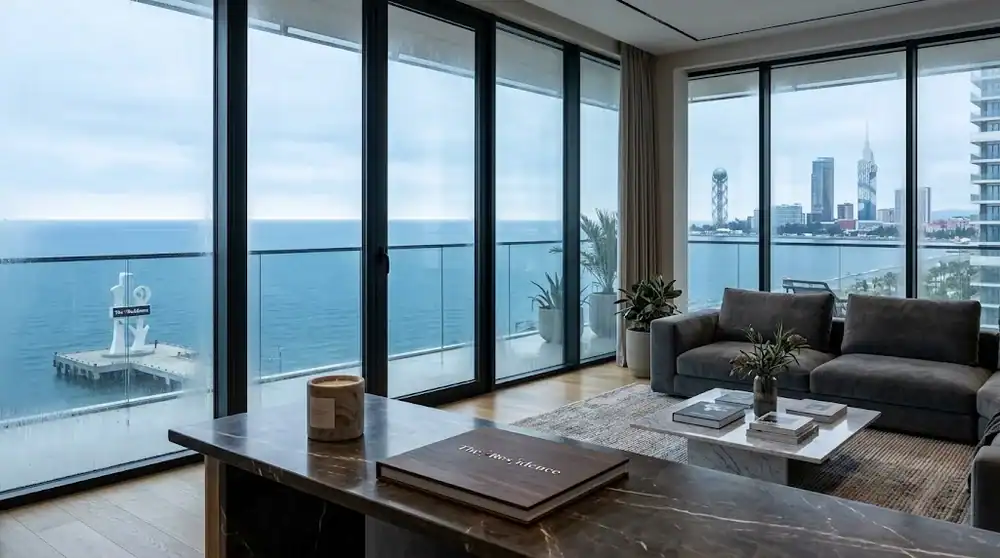
Renovating a home in Batumi raises a question that mood boards skip: where will the moisture go? Georgia’s Black Sea coast is warm, humid, and wet for much of the year. That climate affects how finishes, windows, ventilation, and metal parts perform. The failures rarely show on day one. Trapped moisture behind new drywall, condensation in cold corners, mold behind wardrobes, corroding hardware, and wind-driven rain around window frames tend to appear months after the work is done. Planning for the climate from the start costs far less than tearing out fresh work.
Why Batumi Homes Need Different Planning
Batumi has a humid subtropical climate and is among the wettest cities in Georgia. In drier regions, opening a window usually brings in air that helps a room dry. On the Adjara coast, the outdoor air is often humid too, so airing a room can move moisture around without removing it.
The sea adds salt-laden air, which speeds up corrosion on exposed metal. It also brings wind-driven rain, meaning rain pushed sideways by strong wind. That kind of rain can be forced into facade joints and window perimeters that would stay dry in vertical rainfall. Exposure varies by location. A high seafront unit takes more wind and salt than an apartment several blocks inland. A suburban house may deal more with ground moisture and shade.
Key Takeaways
- Diagnose moisture sources before choosing finishes.
- Ventilation, air conditioning, and dehumidifiers do different jobs.
- Near the sea, check the base metal of hardware, not just its coating.
- How a window is installed matters as much as the glass.
- Plan for vacancy if the home sits empty for part of the year.
Start With Moisture, Not Finishes
New tile and paint can hide a problem for a season, but they will not fix it. First, map how water gets in and where moisture collects. Common sources include facade leaks, failed panel joints, poorly sealed windows and reveals, and slow plumbing leaks. Bathrooms and kitchens add daily vapor. Closed rooms, cold exterior corners, and spaces behind furniture let that moisture settle.
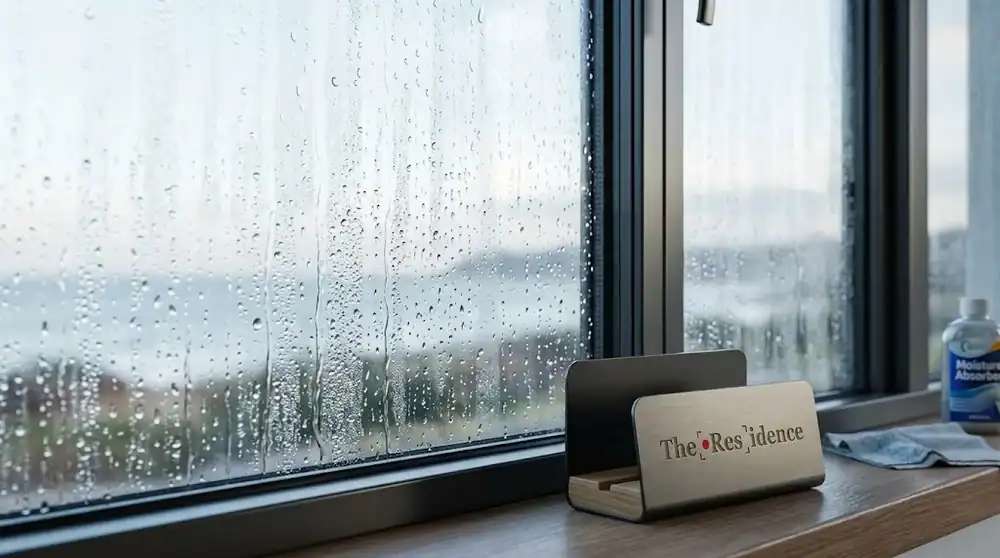
Condensation Is Not Always a Leak
Dampness has two broad origins. Penetration is liquid water coming in from rain or pipes. Condensation forms when humid air touches a surface colder than its dew point, the temperature at which vapor turns to water, much like beads on a cold glass. A damp patch can have either cause, or both. When it appears, after storms or after showers, gives clues. Persistent dampness still needs an on-site assessment.
Before renovation, inspect:
- Ceilings and upper corners for stains
- Window reveals, sills, and frame corners
- Walls behind wardrobes and beds
- Areas under sinks and around showers
- Balcony thresholds
- Exhaust fan performance
- Musty smells in closed cabinets
Ventilation Needs a Real Strategy
An open window helps on dry days. On muggy days it may add humidity, and it does nothing while an apartment is locked. Bathroom and kitchen exhaust should vent moist air outdoors, not into a ceiling void. Air also needs to reach cold exterior walls, so leaving a gap behind large furniture reduces the still pockets where mold often starts.
Mechanical ventilation exchanges air in a controlled way. Air conditioning cools and removes some moisture while it runs. A dehumidifier targets moisture directly. These systems are not interchangeable. An oversized AC unit may cool a room quickly and shut off before it dries the air. The right equipment depends on the home’s size, layout, how it is used, and its actual moisture load, so it should be sized by a qualified HVAC professional.
| Problem | Possible Cause | Useful Response | When to Call a Pro |
| Window condensation | Humid air on cold glass | Run exhaust fans, monitor humidity | Reveals stain or frames stay wet |
| Mold behind furniture | Cold wall, stagnant air | Pull furniture from the wall | Growth returns or spreads |
| Lingering bathroom humidity | Weak or poorly ducted fan | Test the fan and run it longer | Fan does not vent outdoors |
| Corroding fixtures | Salt air, unsuitable metal | Replace with coastal-rated parts | Balcony or structural metal affected |
| Damp after long absence | No airflow, possible leak | Ventilate, dry out, check plumbing | Standing water or rapid mold |
Choose Materials That Can Handle Moisture
Walls and Wet Areas
Start with a dry, sound substrate. Showers need a tested waterproofing system under the tile, over cement board or another suitable moisture-tolerant backer. Tile and grout are not waterproof on their own. Primers, adhesives, membranes, grout, sealants, and finishes should be compatible with one another, ideally from a single system. Mold-resistant paint can help in drier rooms, but it will not stop an active moisture source.
Floors and Cabinetry
Porcelain and ceramic tile work well in kitchens, bathrooms, and entries. Engineered flooring varies widely in how well it tolerates moisture. Water-sensitive boards can swell at their edges, so watch cabinet bases and furniture placed against exterior walls.
Metal Hardware Near the Coast
Hinges, fasteners, railings, light fixtures, and outdoor AC units all face salt. A coating can hide a base metal that corrodes once the coating is scratched. Verify the base material, the environment it is rated for, and the manufacturer’s guidance. Avoid mixing dissimilar metals, which can speed up corrosion.
| Area | Higher-Risk Choice | More Climate-Appropriate Approach | What to Verify |
| Shower walls | Tile on standard gypsum | Membrane over a suitable backer | System compatibility |
| Kitchen floors | Water-sensitive laminate | Porcelain or humidity-rated flooring | Moisture rating |
| Cabinet bases | Unsealed particleboard | Moisture-resistant, sealed boards | Edge sealing |
| Balcony hardware | Plated steel | Metals rated for coastal use | Base metal, matching fasteners |
Windows Can Become the Weak Point
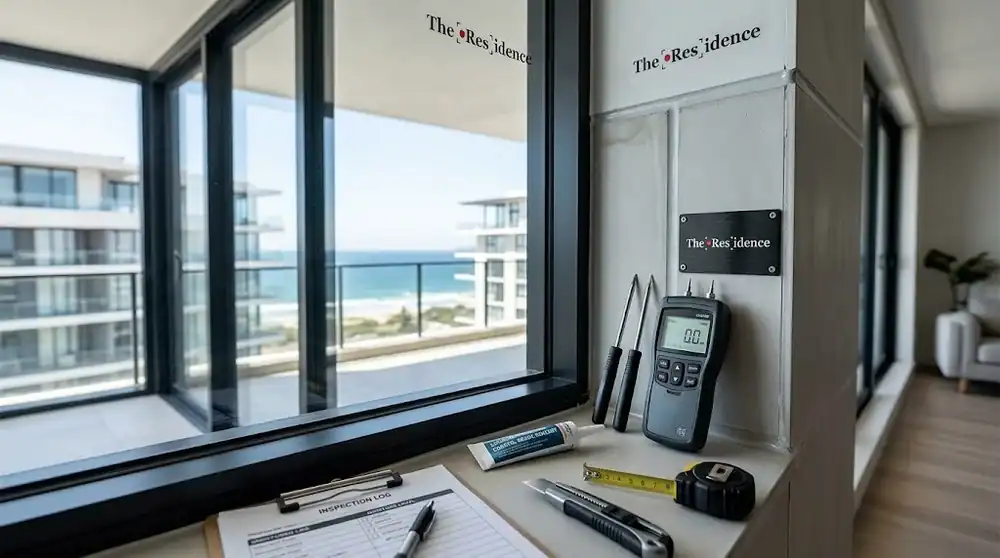
Better glazing keeps interior glass warmer, but installation quality decides whether wind-driven rain stays out. A good installation has sealed perimeter joints and drainage paths that let water escape. Its reveals are built to avoid thermal bridges, which are spots where heat bypasses insulation and leaves cold patches that attract condensation. Replacing a glass unit will not fix a poorly installed frame. Repainting a stained reveal will not stop recurring damp.
- Stains or mold on reveals and sills
- Cracked or hardened perimeter sealant
- Blocked drainage slots
- Water marks after storms
- Fogging between panes
Insulation Must Work With the Climate
Insulation changes where a wall gets cold. If moist air reaches a layer inside the wall that is below the dew point, water can form out of sight. Vapor generally moves from warmer, wetter air toward cooler, drier air. On this coast, that direction can reverse between winter heating and summer air conditioning.
That is why there is no universal vapor barrier rule. The right placement depends on the wall’s construction, its materials, the climate, and how the home is heated and cooled. Interior insulation needs particular care because it leaves the original wall colder. Changes to exterior walls are best designed by a building-science specialist or qualified designer, who should also check current Georgian energy-efficiency requirements.
A coastal renovation succeeds when the building can shed water, manage moisture, and dry safely, not when every surface merely looks waterproof.
Plan for an Apartment That Sits Empty
Many coastal homes in Batumi stay closed for months while their owners are abroad. When no one is there, a slow leak can go unnoticed and closets on exterior walls can develop mildew. Textiles and upholstery absorb moisture. Before leaving, shut off the water where practical and check appliance hoses. Follow manufacturer guidance on leaving AC or a dehumidifier running, and keep interior and closet doors open. Remote humidity and leak sensors give early warning, and a local contact can visit and arrange HVAC servicing. No single device removes the risk.
Inspect Before Buying or Renovating
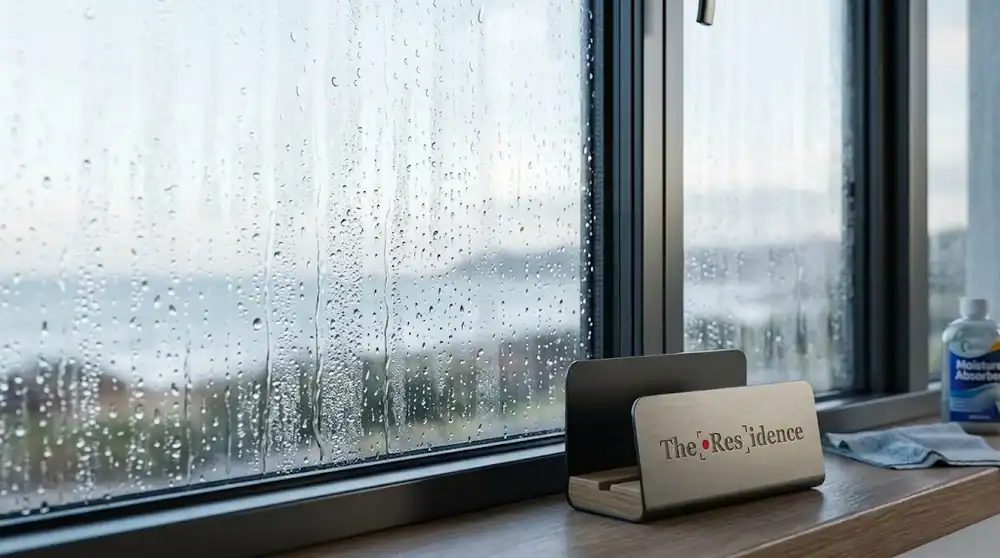
If you are buying an apartment in Batumi, check its technical condition before making design decisions. Fresh cosmetic work, even in a new building, does not prove that hidden structures and services are sound. For apartments, the shared roof, facade, and shafts matter too. Ask for technical documentation, and consider hiring a qualified inspector or engineer to estimate how much work lies ahead.
Pre-purchase checklist:
- Mold, staining, or isolated fresh paint
- Persistent musty odor
- Window, balcony, and facade joints
- Ceilings below bathrooms or the roof
- Working exhaust fans
- Signs of past plumbing leaks
- Electrical safety in damp areas
- HVAC condition and corrosion on outdoor units
- Shared building areas
Budget for Prevention, Not Rework
With limited funds, spend first on stopping water sources, then on ventilation, windows, wet-area waterproofing, compatible materials, electrical safety, and metal protection. Decorative upgrades come after that. Premium finishes installed over an unresolved moisture problem often end up being paid for twice.
The work you cannot see often decides how long the work you can see will last.
Frequently Asked Questions
Why do Batumi apartments get condensation?
Humid air from cooking, showers, and the outdoors meets cold glass, thermal bridges, or exterior walls. Closed rooms and weak exhaust make it worse.
Can air conditioning prevent mold?
It removes some moisture while it runs, but it will not fix leaks, poor exhaust, or stagnant corners. Correct sizing matters.
What materials work well in humid apartments?
Porcelain tile, waterproofing systems in wet zones, moisture-tolerant backers, and compatible adhesives and sealants, all installed to the manufacturer’s instructions.
Should coastal apartments use a dehumidifier?
Often it is useful, especially in vacant or closed rooms. Use a hygrometer to confirm the need, and treat the dehumidifier as one part of a broader plan.
What should buyers inspect before purchasing?
Look at windows, ceilings, wet areas, ventilation, plumbing, electrical safety, and shared building elements. Significant defects need a professional opinion.
Does sea air affect indoor metal fixtures?
It can, especially near balconies and windows that are opened often. Choose suitable base metals and inspect fixtures periodically.
Final Thoughts
A durable renovation in Batumi comes from treating the home as a system. That means controlling water, planning ventilation, choosing compatible materials, and inspecting before committing to a design. Build the climate into the renovation plan from the first day rather than dealing with it after problems appear. For anyone who plans to own an apartment or house on the Black Sea coast for years, that approach keeps the home dry, comfortable, and far easier to maintain.