

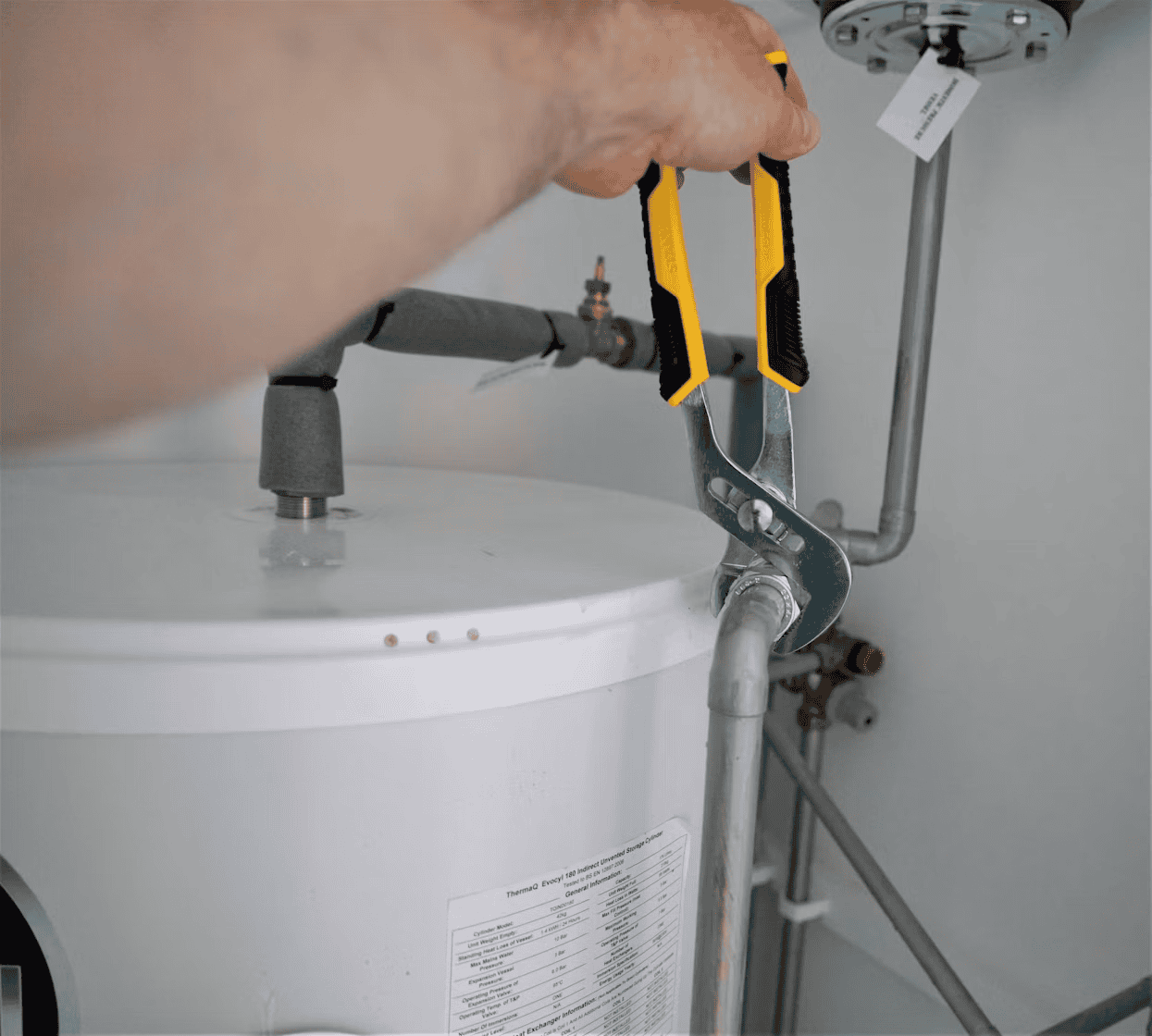
Replacing a water heater can look like a straightforward project: remove the old unit, install a new one, reconnect the utilities, and restore hot water.
In practice, a successful replacement involves much more than matching the size of the old tank.
A water heater interacts with the home’s plumbing, electrical or gas infrastructure, venting, drainage, water pressure, and available installation space. If any of those conditions are overlooked, even a high-quality new unit may perform poorly, require additional work after installation, or fail to deliver the comfort the homeowner expected.
For that reason, homeowners planning a replacement should think of the project as a small mechanical-system upgrade rather than simply an appliance purchase.
1. Determine Why the Existing Water Heater Is Being Replaced
Before choosing new equipment, understand why the current system is no longer meeting the home’s needs.
Common Reasons for Replacement
A homeowner may be considering replacement because of:
- tank leakage;
- corrosion;
- recurring repairs;
- inadequate hot-water capacity;
- rising energy costs;
- inconsistent water temperature;
- remodeling or additional plumbing fixtures;
- a desire to switch fuel types;
- interest in tankless or heat-pump technology.
The reason matters because replacing the old unit with an identical model may reproduce the same problem.
For example, if the household repeatedly runs out of hot water, installing another tank of the same capacity may not solve the issue. If the existing heater is oversized, however, automatically replacing it with another large unit may add unnecessary cost and standby energy use.
2. Review Actual Household Hot-Water Demand
Equipment should be selected for how the home is used today, not simply for what was installed years ago.
Consider Peak Demand
Think about what happens during the busiest period of the day.
A household might have:
- two showers running;
- a dishwasher operating;
- a washing machine filling;
- someone using the kitchen sink.
Those simultaneous loads matter when sizing equipment.
A family of four with staggered schedules may have very different needs from a family of four that uses several bathrooms at the same time each morning.
Look for Future Changes
Also consider whether the household is likely to change.
Potential changes include:
- adding a bathroom;
- finishing a basement;
- building an accessory dwelling unit;
- installing a large soaking tub;
- adding another family member;
- replacing fixtures with higher-flow models.
A water heater expected to remain in service for many years should be selected with reasonable future demand in mind.
3. Decide Whether to Keep the Same Water-Heater Type
Replacement creates an opportunity to reconsider the equipment itself.
The main residential options typically include:
- conventional storage-tank water heaters;
- tankless water heaters;
- heat-pump water heaters;
- electric resistance units;
- gas-fired units.
Each option has different infrastructure requirements.
Storage-Tank Water Heaters
Traditional tank systems are familiar and often relatively straightforward to replace when the existing plumbing and energy source remain unchanged.
Important considerations include:
- tank capacity;
- recovery rate;
- physical dimensions;
- drain-pan requirements;
- available clearance;
- fuel type.
Tankless Water Heaters
Tankless equipment can provide long-duration hot water without maintaining a large storage tank, but installation requirements can be more demanding.
A conversion may require evaluation of:
- gas-line capacity;
- electrical supply;
- venting;
- condensate drainage;
- water flow;
- incoming water temperature;
- service-valve access.
A tankless unit should be selected based on required flow and temperature rise rather than simply comparing it with the gallon capacity of the old tank.
Heat-Pump Water Heaters
Heat-pump water heaters can significantly reduce electrical energy use compared with conventional electric-resistance equipment, but the installation space matters.
The surrounding area needs to provide appropriate operating conditions, along with:
- sufficient air volume or ventilation;
- condensate drainage;
- electrical capacity;
- maintenance access.
Because the unit removes heat from surrounding air, location can affect both performance and comfort in nearby spaces.
4. Inspect the Existing Plumbing Before Installation
A new water heater should not automatically be connected to aging or questionable plumbing components.
Replacement is a useful time to inspect the surrounding system.
Check Shutoff Valves
The cold-water shutoff should:
- operate smoothly;
- close completely;
- show no significant corrosion;
- remain accessible after installation.
An old valve that has not been operated for years may begin leaking once disturbed.
Inspect Visible Piping
Look for:
- corrosion;
- mineral deposits;
- previous leak repairs;
- unsupported piping;
- damaged fittings;
- signs of moisture.
Problems are easier to correct while the old water heater is already being removed.
Consider Water Pressure
Excessive household water pressure can place additional stress on:
- valves;
- fixtures;
- supply lines;
- water-heating equipment.
If there are signs of unusually high pressure or recurring plumbing failures, pressure should be evaluated as part of the installation rather than ignored.
5. Check Expansion-Control Requirements
When water is heated, it expands.
In some plumbing systems, that expansion can move back toward the public water supply. In a closed system, however, check valves, backflow devices, or pressure-reducing valves may prevent that movement.
In those situations, thermal expansion needs to be properly managed.
Depending on the plumbing configuration and local requirements, an expansion tank or other approved method may be necessary.
This is another example of why water-heater replacement should be evaluated as part of the plumbing system rather than as an isolated appliance swap.
6. Evaluate Gas Supply and Venting
For gas-fired water heaters, combustion-related requirements deserve particular attention.
Gas Capacity
A replacement with a similar conventional tank may have similar gas demand.
A conversion to a high-output tankless unit can be different.
Tankless water heaters may have substantially higher maximum firing rates, so the existing gas piping must be capable of supplying the required volume under operating conditions.
Simply having a gas line at the installation location does not necessarily mean it is adequately sized.
Venting
Different equipment may require different venting materials and configurations.
The installer may need to evaluate:
- vent diameter;
- vent material;
- total vent length;
- number of elbows;
- combustion-air requirements;
- termination location;
- manufacturer instructions.
High-efficiency condensing equipment also produces condensate that must be managed appropriately.
7. Verify Electrical Capacity
Even gas water heaters rely on electrical systems in many modern installations.
Electronic ignition, fans, pumps, controls, and condensate systems may all require power.
Electric water heaters place much larger demands on the electrical system.
Before changing equipment types, check:
- panel capacity;
- available breaker space;
- required voltage;
- circuit requirements;
- wiring size;
- nearby disconnect requirements where applicable.
A fuel-switching project can become significantly more expensive if electrical upgrades are discovered only after the new equipment has been selected.
8. Consider Where a Leak Would Go
No water heater should be assumed to remain leak-free forever.
A tank may eventually fail. A fitting can develop a leak. A relief valve may discharge. Condensate can back up.
Installation location determines how serious the consequences could be.
Higher-Risk Locations
Extra planning is especially important when a water heater is located:
- above finished living space;
- near hardwood flooring;
- inside finished closets;
- adjacent to stored valuables;
- in areas without floor drains.
Depending on the installation, appropriate protection may include:
- a drain pan;
- properly routed drainage;
- leak-detection sensors;
- automatic shutoff equipment.
Planning for a future failure can prevent a relatively small equipment problem from becoming a major restoration project.
9. Pay Attention to Water Quality
Water chemistry affects more than faucets and glassware.
Hard water can produce mineral scale inside water-heating equipment.
Storage Systems
Sediment and mineral deposits may accumulate over time, particularly near heated surfaces and at the bottom of the tank.
Tankless Systems
Tankless heat exchangers contain relatively narrow water passages. Mineral scale can reduce heat transfer and restrict flow, making water quality particularly relevant to long-term maintenance.
If a home has visible scale throughout bathrooms and kitchens, it may be worth evaluating hardness when planning new equipment.
Water treatment should still be based on actual water conditions rather than automatically added to every installation.
10. Make Sure the New Unit Can Be Serviced
A water heater may fit physically into a space while still being difficult to maintain.
Homeowners and contractors should consider future access for:
- flushing;
- filter cleaning;
- anode replacement where applicable;
- electrical testing;
- burner service;
- valve operation;
- leak inspection;
- eventual equipment replacement.
Avoid designing storage shelves, cabinets, or finished walls that block critical components.
Good service access can reduce labor costs and make routine maintenance more likely to happen.
11. Understand the Full Scope Before Work Begins
Replacing a straightforward tank with a similar unit may require relatively little modification.
Other projects can involve:
- plumbing changes;
- gas-line upgrades;
- electrical work;
- new venting;
- condensate drainage;
- expansion control;
- equipment relocation.
Getting clarity on these items before installation helps prevent unexpected delays and change orders.
When comparing contractors, homeowners should ask what the proposed scope actually includes rather than comparing equipment prices alone.
Professional Home Rangers water heater installation illustrates the broader planning involved in matching replacement equipment to household demand, existing plumbing, fuel type, venting, and installation conditions.
The goal is not simply to make the new heater fit where the old one stood. It is to make sure the entire system supports the new equipment correctly.
12. Coordinate Replacement With Other Home Improvements
A renovation can be an ideal time to replace or relocate a water heater.
When walls and ceilings are already open, homeowners may have opportunities to improve:
- hot-water pipe routing;
- insulation;
- equipment location;
- electrical service;
- gas piping;
- drainage;
- utility-room access.
Bathroom Renovations
Adding showers, large tubs, or additional bathrooms may change peak hot-water demand.
Kitchen Remodeling
Relocating sinks or appliances can change hot-water distribution and may provide an opportunity to shorten inefficient piping runs.
Basement Finishing
If the water heater will remain in a newly finished basement, consider service clearances and leak protection before walls, flooring, and storage are installed around it.
A little coordination can prevent expensive demolition later.
Questions to Ask Before Approving a Water-Heater Replacement
Before work begins, homeowners can ask the contractor:
- Is the proposed unit properly sized for current demand?
- Does replacement equipment use the same fuel or require infrastructure changes?
- Is the existing gas line adequate?
- Does the electrical panel have sufficient capacity?
- Will venting need to change?
- Is condensate drainage required?
- Is an expansion tank needed?
- Are the existing shutoff valves in good condition?
- Is a drain pan recommended or required?
- Does the water quality affect maintenance?
- Will the unit remain easy to service?
- Are permits or inspections required locally?
The answers provide a much clearer picture of the project than equipment specifications alone.
A Better Way to Think About Water-Heater Replacement
Homeowners naturally focus on price, capacity, and efficiency ratings when shopping for a new water heater.
Those factors matter, but they do not tell the whole story.
A successful replacement also depends on:
- correct sizing;
- sound plumbing;
- adequate fuel or electrical capacity;
- safe venting;
- proper drainage;
- water quality;
- service access;
- thoughtful installation.
Two identical water heaters can provide very different long-term results depending on how and where they are installed.
Final Thoughts
Water-heater replacement is one of those home-improvement projects where the parts hidden from view matter just as much as the appliance itself.
Before choosing equipment, evaluate why the existing system is being replaced, how much hot water the household actually uses, whether infrastructure changes are required, and how the new system will be maintained.
A thoughtful installation can improve reliability, simplify future service, reduce the risk of water damage, and ensure the new equipment delivers the performance the homeowner expected.
Instead of asking only, “Which water heater should I buy?” a better question is:
“What water-heating system makes the most sense for this home?”
That small change in perspective can lead to a much better project.