
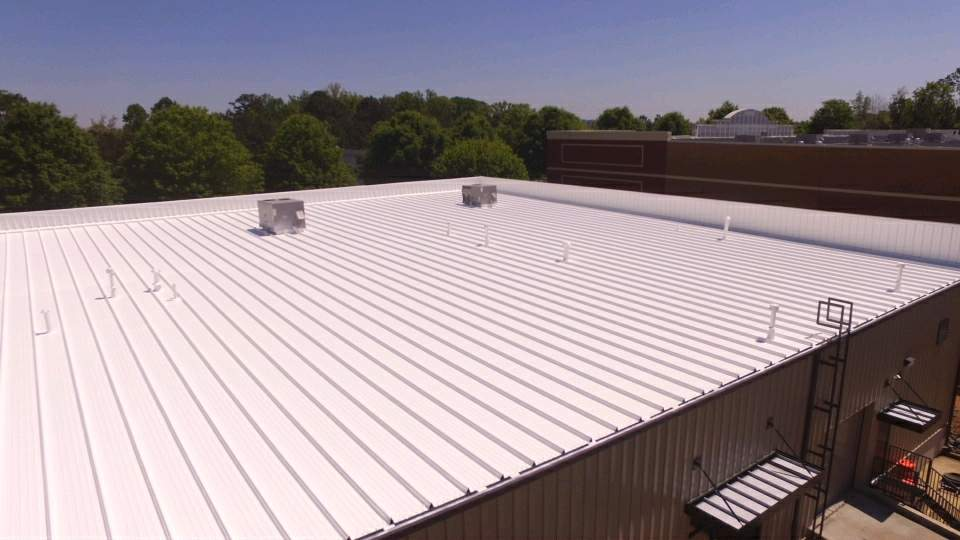
Bought your first rental property or small commercial building? The roof works nothing like the one on your house. Making the wrong assumptions can cost you tens of thousands of dollars.
Here’s what every property investor needs to know to protect their asset and plan strategically.
Why “Flat” Roofs Are More Complex Than They Look
Most commercial buildings use low-slope designs for practical reasons: wide spans, easier HVAC placement, and simpler construction across large footprints. But “flat” is a misleading term.
These roofs are engineered with a slight pitch to direct water toward drains, scuppers, or internal drainage systems. Every inch of that surface is designed around water management.
When something goes wrong, it usually starts there. Standing water stresses membranes, weakens seams, and accelerates material breakdown. And unlike a residential roof, where rain sheds quickly, a low-slope roof has to move water carefully across the entire surface.
Commercial roofs also have far more penetrations than residential systems. HVAC units, vents, skylights, and mechanical curbs each require flashing and sealing. Each one is a potential failure point if not maintained. A cracked vent pipe boot is one of the most common causes of interior leaks.
The 5 Most Common Commercial Roofing Systems
Knowing which system your building uses shapes every decision around budgeting, maintenance, and repair.
TPO (Thermoplastic Polyolefin)
One of the most popular systems today. TPO features heat-welded seams and a reflective surface that reduces heat absorption. It’s lightweight and cost-effective, but installation quality matters enormously. Poor seam welding leads to early failure.
EPDM (Rubber Roofing)
A decades-old workhorse known for flexibility and tolerance of temperature swings. Seams are adhered or taped rather than welded, so they require careful monitoring over time. Many older commercial properties still use EPDM. If you’re buying an existing building, verify the membrane age and maintenance history.
Metal Roofing
Common in warehouses, industrial buildings, and agricultural facilities. Standing-seam metal roofs are durable and long-lasting but require specialized installation. Fasteners and expansion joints must be properly engineered; otherwise, leaks will develop.
Built-Up Roofing (BUR)
Multiple layers of bitumen and reinforcing fabric create a thick, protective surface. Heavier and more labor-intensive than single-ply systems, but it offers strong multi-layer protection. Repairs often involve addressing specific layers rather than patching the surface alone.
Modified Bitumen
An evolution of BUR with enhanced flexibility and durability. A solid choice for buildings that need robust protection in variable climates.
Working with experienced flat-roof contractors in GA can help ensure accurate system identification and condition assessment before minor issues escalate into high costs.
Maintenance Tasks That Prevent Major Repairs
Most commercial roofs don’t fail because of age. They fail because of deferred maintenance. These three areas account for most preventable damage.
Drainage Inspections
Leaves, debris, and wind-blown trash clog drains and scuppers faster than most owners expect. When water can’t exit efficiently, it ponds. Ponding adds weight stress and weakens the membrane from below.
Inspect drains seasonally, especially after heavy storms. Keep in mind that gutters play a supporting role in this system as well. Proper gutter maintenance directly prevents roof and foundation damage that can compound over time.
Seam and Flashing Monitoring
Most leaks don’t originate in the open field of the roof. They start at transitions, curbs, and penetration points. Thermal expansion and building movement gradually separate flashing over time. Catching minor separation early is far cheaper than addressing interior water damage after a tenant complains.
Seasonal and Winter Awareness
Cold climates add another layer of risk. Heat escaping from the building interior warms the roof deck, causing snow to melt and refreeze at the eaves. This is how ice dams form. Ice dams and moisture problems frequently start indoors and can quietly compromise the roofing system before visible damage appears.
Twice-Yearly Professional Inspections
Visual checks from the ground don’t count. Trained technicians identify seam fatigue, membrane shrinkage, fastener issues, and subtle deterioration that untrained eyes miss. Professional documentation also strengthens insurance claims and resale negotiations.
How to Budget for Commercial Roofing Costs
Think of commercial roofing expenses in three tiers.
- Minor Repairs cover localized membrane patching, resealing flashing, clearing blocked drains, and small punctures. Handle these promptly, and they stay inexpensive. Delay them, and they grow into the next category.
- Mid-Level Repairs involve replacing larger membrane sections, repairing insulation compromised by water intrusion, or addressing storm damage. These projects are more involved and may require temporary business disruption if tenants are below.
- Full Replacement is a capital improvement cycle, not a surprise expense. Costs are calculated on a per-square-foot basis and vary based on material, tear-off requirements, insulation upgrades, and code compliance. Some systems allow overlays; others require full removal. Knowing the approximate age and condition of your current roof helps you forecast a replacement and integrate it into your long-term financial plan.
5 Questions to Ask Before Buying a Commercial Property
The roof condition should carry the same weight as the financial statements during due diligence. A roof nearing the end of its life can quickly reshape projected returns. (The same principle applies structurally: if you’re evaluating a property for expansion, checking foundation readiness matters just as much as the roof above it.)
1. What roofing system is installed?
TPO, EPDM, metal, and BUR all age differently and carry different repair costs.
2. When was it last replaced or resurfaced?
A clean-looking roof can still be approaching the end of its warranty period. Request documentation.
3. Are maintenance records available?
Consistent inspection reports signal responsible ownership. No records often means deferred maintenance.
4. Has there been prior water intrusion?
Repeated repairs may indicate drainage or flashing vulnerabilities that require further assessment.
5. Is the system under warranty?
Some manufacturer warranties transfer to new owners under specific conditions. Understanding coverage influences negotiation strategy.
Why Roof Condition Affects More Than Just the Building
A poorly maintained roof affects your property from multiple angles.
From an appraisal standpoint, a roof in poor condition lowers valuation and can complicate lending. Buyers conducting due diligence will request inspection reports, and a documented maintenance history reduces perceived risk.
Insurance carriers also evaluate roof age and condition when setting premiums. Older or neglected roofs can lead to higher costs or coverage limitations.
For tenant-occupied properties, roof performance is critical to operational stability. Leaks disrupt operations, damage inventory, and erode tenant confidence. A well-maintained roof supports lease renewals and keeps tenants from looking elsewhere.
Work With a Contractor Who Understands Commercial Systems
Residential crews often lack the equipment, safety protocols, and membrane expertise required for low-slope assemblies. An experienced commercial contractor understands drainage engineering, insulation layering, membrane compatibility, and local code requirements.
Establishing an ongoing relationship with a qualified commercial roofing company offers advantages beyond emergency response. Routine inspections, documented maintenance programs, and strategic lifecycle planning enable you to anticipate costs rather than react to failures.
Treat the Roof as a Financial Asset, Not Just a Building Component
With proactive inspections, the right contractor relationship, and a realistic capital plan, roofing decisions become predictable line items rather than costly surprises. Predictability is what separates stable returns from unexpected losses.