

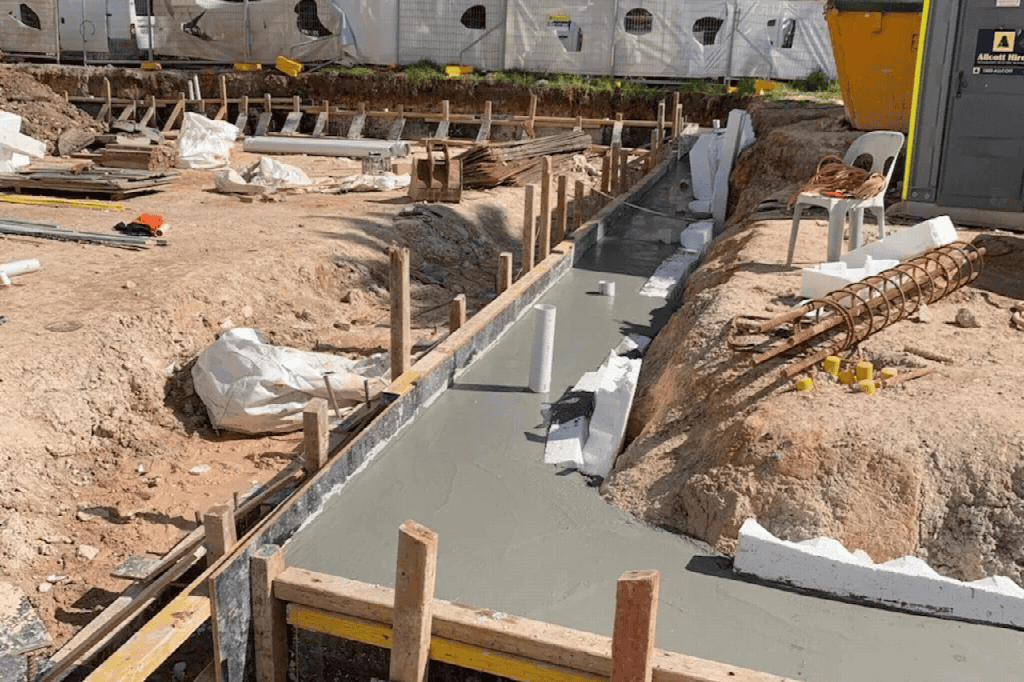
Every successful civil construction project begins with a clear understanding of the land beneath it. While construction planning often focuses on structural designs, materials, equipment and project schedules, ground conditions can have a significant influence on how work progresses. Soil composition, groundwater levels, existing landforms and ground stability all affect the methods used to prepare a site and support new structures. Failing to assess these conditions properly can lead to unexpected excavation challenges, construction delays, additional expenses and potential structural problems.
For developers, builders and project managers working in Newcastle and surrounding areas, ground assessments are an important part of preparing for residential, commercial and infrastructure developments. Local sites can present different challenges depending on their geology, previous land use, drainage conditions and proximity to existing structures. Projects involving difficult terrain or unstable ground may require specialised civil construction support across Newcastle to address excavation support, soil stabilisation and ground improvement requirements. Understanding the relationship between ground conditions and construction planning helps project teams make informed decisions before major work begins.
Understanding Ground Conditions in Civil Construction
Ground conditions refer to the physical and geological characteristics of the land where construction is planned. These include soil types, rock formations, groundwater, natural slopes and the presence of existing underground structures. Each factor can influence how a site responds to excavation, loading and changes in its surrounding environment.
For example, a site containing competent rock may require different excavation equipment from one dominated by soft clay or loose sand. Similarly, land with a high groundwater level may need additional measures to manage water during construction. Ground conditions also influence the selection of foundations, retaining structures and temporary excavation support systems. Even neighbouring properties can have noticeably different subsurface characteristics. This makes it important to assess each construction site individually rather than relying entirely on information from nearby developments. Understanding these conditions early allows engineers and contractors to select construction methods that are appropriate for the site.
How Different Soil Types Affect Construction Projects
Different soil types behave differently when exposed to excavation, moisture and structural loads. Sandy soils generally allow water to pass through relatively easily, but loose or poorly compacted sand may require additional support during excavation. Clay soils can retain moisture and may experience changes in volume as their moisture content varies. These characteristics can influence ground movement and foundation performance.
Other sites may contain gravel, fill material, weathered rock or combinations of different soil layers. Uncontrolled fill can present particular challenges because its composition and level of compaction may be inconsistent. The suitability of any soil for construction depends on more than its general classification. Engineers also consider factors such as strength, density, compressibility and drainage characteristics. For example, a clay deposit may provide suitable foundation support under certain conditions but require additional investigation where significant settlement or movement is possible. Identifying soil characteristics before construction helps determine whether the existing ground can support the proposed development or requires improvement.
Why Geotechnical Investigations Are Important
A geotechnical investigation provides information about the subsurface conditions of a proposed construction site. Depending on the project, investigations may involve boreholes, test pits, soil sampling, laboratory testing and other methods used to assess ground properties. The findings help engineers understand the materials beneath the surface and identify potential construction risks.
The investigation results can inform foundation design, excavation planning, retaining wall requirements and ground improvement strategies. For example, testing may reveal weak soil layers beneath an otherwise stable-looking surface or identify groundwater conditions that could complicate excavation. Geotechnical reports may also provide recommendations concerning allowable bearing pressures, settlement considerations and appropriate construction methods. The extent of investigation required depends on the size, complexity and risk profile of the project. Although investigations add an upfront cost, they can reduce uncertainty and help prevent expensive changes during construction. They also provide a technical basis for decisions that would otherwise depend on assumptions about underground conditions.
How Groundwater and Drainage Influence Site Stability
Groundwater can significantly affect the behaviour of soil and rock during construction. When water accumulates within the ground, it can influence soil strength, increase pressure behind retaining structures and create difficulties during excavation. The effects depend on soil permeability, groundwater levels and the proposed construction activities.
Excavations below the groundwater table may require temporary water management measures to maintain suitable working conditions. However, removing groundwater must be carefully planned because changes in groundwater levels can affect surrounding soil and nearby structures. Surface drainage is equally important, particularly on sites where rainfall can flow towards excavations or exposed slopes. Poorly managed stormwater may contribute to erosion, localised instability and sediment movement. Construction teams may use drainage systems, temporary diversion measures and erosion controls to manage these risks. The appropriate approach should be based on site-specific assessments rather than assuming that removing water will always improve stability. Effective water management helps protect both the construction area and surrounding properties.
Common Challenges When Building on Sloping or Unstable Land
Sloping sites can introduce additional challenges because excavation and construction activities may alter the balance of forces acting on the ground. Cutting into a slope can remove material that previously provided support, while placing fill or structures near the top may increase loading. These changes can affect stability if they are not properly assessed and managed.
Construction on uneven terrain may require retaining walls, ground anchors, soil nails or other engineered support systems. The appropriate method depends on the slope geometry, ground properties, groundwater conditions and nearby structures. Access can also be more difficult on steep sites, influencing the type of machinery and construction sequence required. In some circumstances, temporary support is necessary before permanent structures can be installed. Project teams must also consider how construction activities could affect neighbouring land, existing buildings and underground services. A carefully designed excavation and support strategy helps manage these risks while allowing construction to proceed in a controlled manner.
How Ground Improvement Techniques Support Construction
Ground improvement involves modifying existing soil or ground conditions to achieve the performance required for construction. These techniques may be considered when the natural ground does not provide sufficient strength, stability or settlement resistance for the proposed development. The appropriate method depends on the identified ground conditions and engineering requirements.
Common approaches include soil compaction, stabilisation using suitable additives, reinforcement and other specialised treatment methods. Some projects may require ground anchors or soil nails to improve slope stability, while retaining structures can provide support where excavation or changes in ground level are necessary. Shotcrete may also be used as part of an engineered slope protection or ground support system. However, these methods are not interchangeable, and each has limitations. For example, compaction may improve certain loose soils but may not adequately address deeper weak layers. Ground improvement should therefore be designed around the actual site conditions and verified through appropriate testing or monitoring. Selecting a suitable technique can help reduce ground-related risks and support long-term structural performance.
Why Early Ground Assessments Help Prevent Costly Delays
Unexpected ground conditions are a common source of uncertainty in civil construction. Discovering unsuitable soil, groundwater or buried obstructions after excavation has begun can require changes to the construction method, additional engineering work or revised project schedules. These adjustments may affect equipment requirements, labour costs and coordination between contractors.
Early ground assessments help project teams identify potential challenges before committing to major construction activities. Geotechnical information can be incorporated into design development, cost estimates and construction planning. It may also help determine whether specialist ground engineering services or temporary support systems will be required. However, no investigation can completely eliminate uncertainty because subsurface conditions can vary between testing locations. Projects should therefore include appropriate contingency planning and procedures for responding to unexpected findings. Clear communication between engineers, designers, developers and contractors is essential when interpreting investigation results and selecting construction methods. By addressing foreseeable ground-related risks early, project teams can make better-informed decisions and reduce the likelihood of avoidable delays.
Conclusion
Ground conditions influence almost every stage of a civil construction project, from initial site preparation and excavation to foundation design and long-term structural performance. Soil characteristics, groundwater, slopes and existing site conditions can create challenges that are difficult to identify through surface observations alone. Proper investigations and engineering assessments provide the information needed to select suitable construction methods and manage potential risks.
For construction projects in Newcastle and surrounding areas, understanding the ground before major work begins can support safer operations, more accurate planning and better cost management. Developers and contractors should consider geotechnical investigations, drainage requirements and ground improvement options as part of the early project planning process. By making decisions based on reliable site information and appropriate engineering advice, construction teams can reduce uncertainty and establish a stronger foundation for successful project delivery.