

Excavation is an essential part of many residential construction projects, including home extensions, basement developments, swimming pool installations and foundation preparation. However, excavation work can create significant noise and vibration, particularly when machinery operates close to neighbouring properties. In established residential areas, where houses are often positioned near shared boundaries, these disturbances can affect nearby residents and raise concerns about potential damage to existing structures. Understanding how excavation activities generate noise and vibration is important for planning construction work responsibly and reducing unnecessary disruption.
For builders and homeowners undertaking construction projects in Sydney, managing excavation impacts requires careful site assessment, suitable equipment and effective communication with surrounding residents. Properties with narrow access points or limited working space can present additional challenges because machinery may need to operate close to buildings, fences and retaining walls. Contractors providing tight access excavation Sydney services can assess restricted working conditions and identify suitable excavation methods for the site. By understanding the factors that influence noise and vibration, property owners can make informed decisions about excavation planning and appropriate protective measures.
Why Excavation Noise and Vibration Matter in Residential Areas
Excavation activities can generate noise from machinery engines, hydraulic equipment, material handling and the breaking or removal of soil and rock. While some noise is unavoidable during construction, excessive or prolonged disturbance can affect neighbouring households, particularly when work occurs close to living areas, home offices or outdoor spaces.
Vibration presents a different concern because mechanical energy can travel through the ground and potentially affect nearby structures. The level of vibration experienced at neighbouring properties depends on several factors, including the excavation method, ground conditions, equipment type and distance from the work area. Although not all vibration causes structural damage, noticeable movement can create understandable concerns among residents. In some circumstances, vibration may contribute to cosmetic or structural damage, particularly where buildings are already vulnerable. Managing these impacts requires more than simply selecting smaller machinery. Contractors should consider the characteristics of the site, the proposed excavation activities and the condition of surrounding structures before work begins.
Understanding the Main Sources of Excavation Noise
Different excavation activities produce different types and levels of noise. Conventional excavators generate sound through their engines, hydraulic systems and movement across the site. Additional noise may occur when buckets contact hard surfaces, rocks are loaded into containers or excavated materials are transported away from the property.
Rock excavation can be particularly noisy because it may involve hydraulic breakers, rock saws or other specialised equipment. Hydraulic breaking produces repeated impacts as the attachment fractures hard material, while rock sawing generates noise from cutting equipment and associated machinery. The actual noise levels depend on equipment specifications, operating conditions and the material being excavated. Contractors can reduce unnecessary disturbance by maintaining equipment properly, avoiding excessive engine idling and selecting suitable methods for the work. Planning material handling can also help prevent avoidable noise from repeated loading and movement. Where practical, positioning equipment and temporary barriers strategically may reduce sound reaching neighbouring properties, although the effectiveness of these measures depends on the site layout and noise source.
How Ground Conditions Influence Vibration During Excavation
Ground conditions play an important role in determining how excavation vibrations travel through a site. Sydney properties may contain varying combinations of soil, clay, sandstone, fill material and other geological features. These materials respond differently to excavation activities, influencing both the methods required and how vibration propagates through the surrounding ground.
Excavating soft soil generally involves different equipment and techniques from breaking through solid rock. Impact-based methods can generate vibration that travels beyond the immediate excavation area, while certain cutting methods may produce different vibration characteristics. However, no excavation technique can be assumed to eliminate vibration completely. Ground conditions, equipment operation and the distance to nearby structures must all be considered. Contractors may need geotechnical information to understand subsurface conditions before selecting an excavation method. Where vibration-sensitive structures are located nearby, specialist assessment or monitoring may be appropriate. Understanding the ground profile helps contractors choose practical methods and identify potential risks before excavation begins.
Choosing Suitable Machinery for Restricted Residential Sites
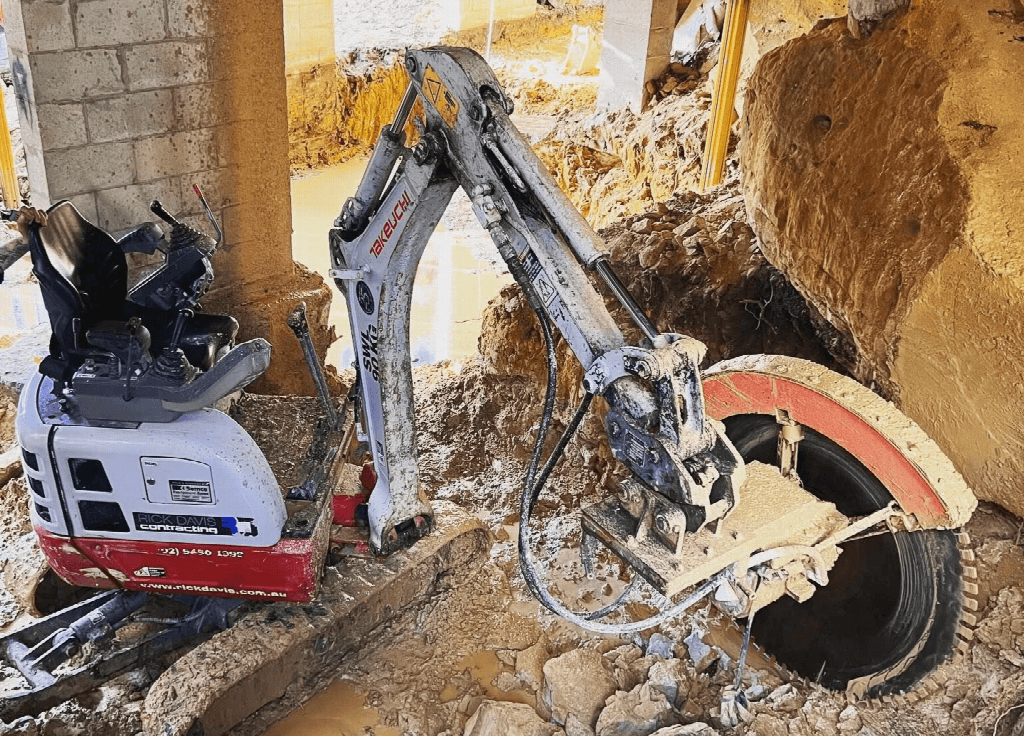
Selecting appropriate excavation machinery is especially important when working on narrow residential blocks. Large excavators may be unsuitable for properties with limited side access, overhead restrictions or insufficient operating space. Compact excavators and specialised attachments can provide alternatives for certain excavation tasks while allowing contractors to work within restricted areas.
However, smaller machinery does not automatically produce less noise or vibration in every situation. The attachment being used, the material being excavated and the operating technique can have a greater influence on disturbance than machine size alone. For example, a compact excavator fitted with a hydraulic breaker may still generate noticeable vibration when working through hard rock. Contractors should evaluate equipment suitability based on access dimensions, excavation depth, ground conditions and proximity to neighbouring buildings. Where appropriate, alternative methods such as controlled rock cutting may be considered, although these techniques also have their own noise, dust and operational requirements. Choosing machinery that suits the entire project can help reduce unnecessary operating time and avoid complications caused by unsuitable equipment.
Protecting Neighbouring Buildings and Boundary Structures
Excavation near existing buildings requires careful consideration of foundations, retaining walls, boundary fences and underground services. Removing soil can change the support provided to nearby structures, particularly when excavation extends below existing footing levels or occurs close to shared property boundaries. These risks are separate from vibration and may require specific engineering controls.
Before excavation begins, contractors should assess the proposed depth and location of the work in relation to neighbouring structures. Depending on the project, structural engineering advice, geotechnical assessment or temporary ground support may be necessary. Measures such as shoring, underpinning or staged excavation may be required where ground stability is a concern. For projects with significant potential impacts, a pre-construction condition survey can document the visible condition of nearby buildings before work starts. This may help distinguish existing defects from changes identified during construction. Vibration monitoring may also be appropriate when sensitive structures are located close to the excavation area. Protective measures should be determined by qualified professionals and implemented according to the specific site conditions rather than relying on general assumptions about safe excavation distances.
Planning Excavation Schedules and Communicating With Neighbours
Effective communication can help reduce disputes and misunderstandings during residential excavation projects. Neighbours may be more accepting of temporary construction disturbances when they understand what work is planned, when noisy activities are expected and how long the project may take. Providing accurate information before excavation begins allows nearby residents to prepare for potential inconvenience.
Homeowners and builders should confirm applicable construction hours and noise requirements before scheduling work. In NSW, permitted working hours can depend on local council conditions, development approvals and relevant environmental regulations. Particularly noisy activities may be subject to additional restrictions or management requirements. Contractors should plan excavation sequences to avoid unnecessary repetition of disruptive tasks and coordinate equipment deliveries, rock removal and waste collection where practical. If unexpected conditions require changes to the schedule, communicating these adjustments promptly can help maintain positive relationships with neighbouring residents. Providing a suitable contact person for construction-related concerns may also help resolve issues before they escalate. Clear communication does not eliminate noise, but it supports more responsible project management.
How Professional Site Assessments Help Reduce Disruption
A professional site assessment provides an opportunity to identify potential excavation challenges before machinery arrives. Contractors can examine access limitations, ground conditions, nearby buildings and the proposed excavation area to determine which methods are suitable. This information helps establish realistic expectations about equipment requirements, project duration and possible disturbances.
For projects near neighbouring homes, the assessment may also identify whether additional engineering advice, vibration monitoring or construction management measures are necessary. Contractors should consider the location of underground services, the stability of surrounding ground and the movement of machinery and materials through the property. Where significant rock excavation is expected, evaluating alternative techniques may help identify an appropriate balance between efficiency, noise and vibration. A clear excavation plan should explain how identified risks will be managed and who is responsible for implementing protective measures. Although unexpected ground conditions can still arise, careful preparation reduces uncertainty and supports a more controlled construction process.
Conclusion
Noise and vibration are common considerations during residential excavation, particularly when work takes place near neighbouring homes. Machinery operation, rock removal, ground conditions and restricted access can all influence the level of disturbance experienced by surrounding properties. While these impacts cannot always be eliminated, appropriate planning and equipment selection can help manage them.
Builders and homeowners should assess site conditions, understand applicable construction requirements and consider the potential effects on nearby structures before excavation begins. Professional assessments, suitable protective measures and clear communication with neighbours can help reduce unnecessary disruption and support safer construction practices. By approaching excavation carefully, property owners can complete essential groundworks while respecting the surrounding residential environment.