


Furniture does more than fill a room. It shapes how a space feels, how well it holds up over years of use, and whether it still looks right years after you move it in. When you’re renovating a home, the furniture you choose becomes part of the whole picture, not something you figure out after the walls are painted.
Most homeowners end up weighing two broad options: mass-produced wood furniture or handcrafted pieces made by skilled woodworkers. Neither one is automatically the right call. The better fit depends on your budget, what the furniture needs to do, and what you actually want from your home long term.
When Mass-Produced Wood Furniture Makes Sense
Walk into any large furniture store, and you’ll see rows of matching sets, flat-pack shelving, and ready-to-ship dining tables. This is mass-produced furniture, and for a lot of situations, it works well enough to be worth considering seriously.
The biggest draw is price. You can furnish a guest bedroom or a kids’ room without spending a lot, and you can usually get what you need within a week or two. The designs are consistent, so matching pieces across a room is simple and mostly stress-free.
What to Watch Out For
The materials used in most mass-produced furniture are a mix of particleboard, MDF, and veneers. These hold up fine under light use, but they don’t age as gracefully as solid wood. Scratches tend to show more, and repairs are harder because the surface layer is thin.
If a drawer track breaks or a joint loosens, replacement parts are not always easy to find. Some pieces aren’t designed to be repaired at all; they’re meant to be replaced when something goes wrong.
For a rental property, a transitional space, or a room that doesn’t get much daily use, mass-produced furniture is often a practical option.
What Makes Handcrafted Wood Furniture Different
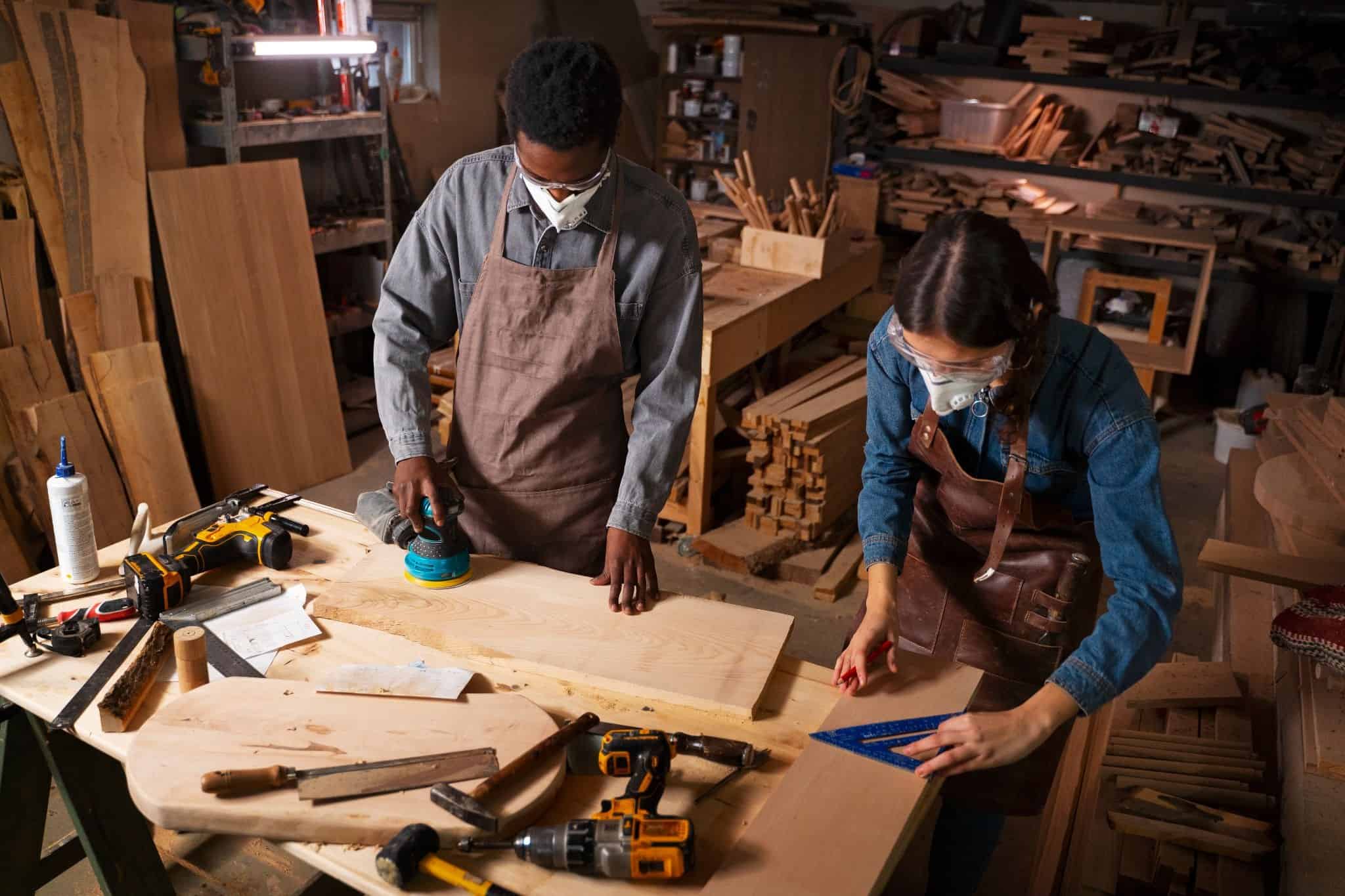
Handcrafted furniture is made by woodworkers who cut, join, and finish each piece with more attention to detail than a factory can reasonably provide. The difference shows up in small things: how the drawer slides, how the joints fit together, how the surface looks in different light.
Most handcrafted pieces use solid wood throughout, not just on the visible surfaces. That matters because solid wood can be sanded, refinished, and repaired many times over. A table made this way might outlast several rounds of home renovation without looking tired.
Flexibility in Design and Finish
One advantage that often goes overlooked is the ability to specify exactly what you want. You can choose the wood species, stain color, hardware, and dimensions. If your dining room has an odd corner or your entryway needs a bench that fits a specific wall, a woodworker can build around your actual space rather than making you work around standard sizes.
This is one situation where custom wood furniture makes the most sense, especially for homeowners dealing with unusual layouts, sloped ceilings, or existing built-in features. Off-the-shelf pieces often don’t fit well, while getting something made to order solves the fit problem and usually results in a space that looks more intentional and cohesive.
Handcrafted furniture does cost more upfront. But you’re paying for something built to last, not something that won’t need to be replaced in three to five years.
Which Option Fits Your Renovation?
In most homes, a combination of both works best. A bedroom remodel might call for a solid wood bed frame that you plan to keep for twenty years, paired with a mass-produced nightstand that you’re happy to swap out later. A kitchen renovation might include a handcrafted island built to fit your exact footprint, while the pantry shelves are standard units from a big-box store.
Thinking Room by Room
High-use areas like living rooms, kitchens, and primary bedrooms are usually worth investing in. Furniture in these spaces gets touched every single day. Quality construction holds up better under that kind of use, and a well-made piece in a central room pulls the whole space together in a way that cheaper alternatives rarely do.
Lower-traffic rooms, utility spaces, and areas that might be repurposed down the line are good candidates for more budget-friendly choices. There’s no need to spend heavily on a home office that might become a nursery in two years.
Budget-friendly options also make sense when you’re still figuring out how you want to use a space. Living with furniture for a season before committing to something permanent is a completely reasonable approach, and it saves you from expensive decisions you might later regret.
Final Considerations Before You Buy
Price at the register is not the same as long-term cost. A cheaper piece that needs replacing in four years ends up costing more than a solid piece that lasts fifteen.
Think about maintenance too. Solid wood needs occasional care, oiling or refinishing depending on the type, but it responds well to that attention over time. Veneer and composite surfaces require less maintenance, but once they’re damaged, repairs are often difficult or impractical.
Style consistency matters for renovation projects in particular. Furniture that clashes with your trim, flooring, or fixtures can undermine a lot of careful planning. Whether you go mass-produced or handcrafted, keep the overall look of the space in mind before you commit to anything.
Conclusion
There’s no single answer to whether mass-produced or handcrafted wood furniture is the better choice. The right decision comes down to the room, the budget, and how long you want what you buy to last.
For rooms where furniture will see heavy daily use or needs to fit a specific space, investing in quality tends to pay off over time. For areas with lighter demands or where you expect your needs to change, more affordable options make good practical sense.
The goal is furniture that fits your renovation and your life, not just what’s available or what looks good in a showroom. Think through each room before you buy, and the decisions usually become much easier to make.