
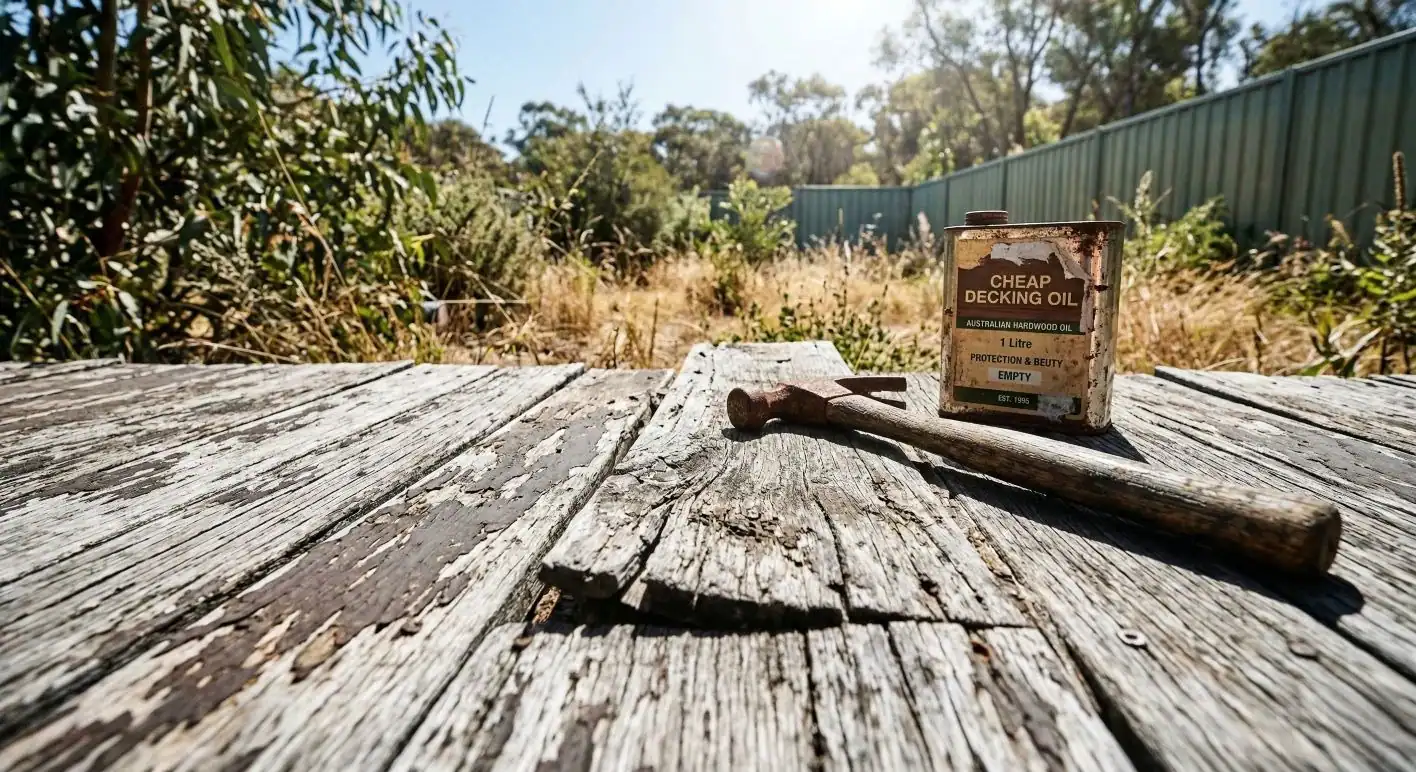
You don’t want a traditional timber deck. You think you do. You probably saw a nice glossy photo online and thought it would look brilliant next to the barbie. But you have three kids, a dog, and a massive mortgage. You absolutely lack the time to scrub deck wash into spotted gum every Easter long weekend.
I build outdoor living spaces across Queensland and New South Wales for a living. My clients all want the exact same thing. A beautiful, quiet spot to drink a cold beer on a Friday arvo. Nobody wants to do the hard yakka to keep it looking good.
Here are the five rules you need to follow to get your weekends back.
1. Ditch the Traditional Timber
People get weirdly romantic about wood. They love the natural grain and the earthy smell. That works fine if you want to build a nice jewelry box for your bedside table. We need to build a structural floor outside in the dirt. It gets hammered by hail, muddy footy boots, and dropped sausages. You need something bulletproof.
The harsh Australian sun destroys natural timber. It bakes the expensive oil right out of the grain. Then the summer storms hit. The boards warp, cup, and split in a miserable cycle.
A standard 30 square metre timber deck demands about 16 hours of maintenance every single year just to survive. You spend your time sanding and pressure washing. You drop 250 bucks a tin on premium decking oil. Your weekend vanishes.
2. Invest in Capped Synthetics
I installed my first plastic deck about fifteen years ago. Those early materials looked exactly like cheap plastic picnic tables. I hated them. But manufacturing technology changed rapidly over the last decade.
Today, a high quality composite decking board mimics the texture and colour variation of real timber perfectly. But it never splinters. It never rots. The local termites completely ignore it. You clean it with warm soapy water and a stiff broom. Your annual maintenance drops from 16 hours of backbreaking labour to about 45 minutes of casual sweeping.
You must buy a capped product. Manufacturers mix recycled wood fibres and plastic to create a strong core. Then they wrap that core in a high performance polymer shell. This cap protects the board from UV rays and heavy moisture.
3. Switch to Cellular PVC for Wet Areas
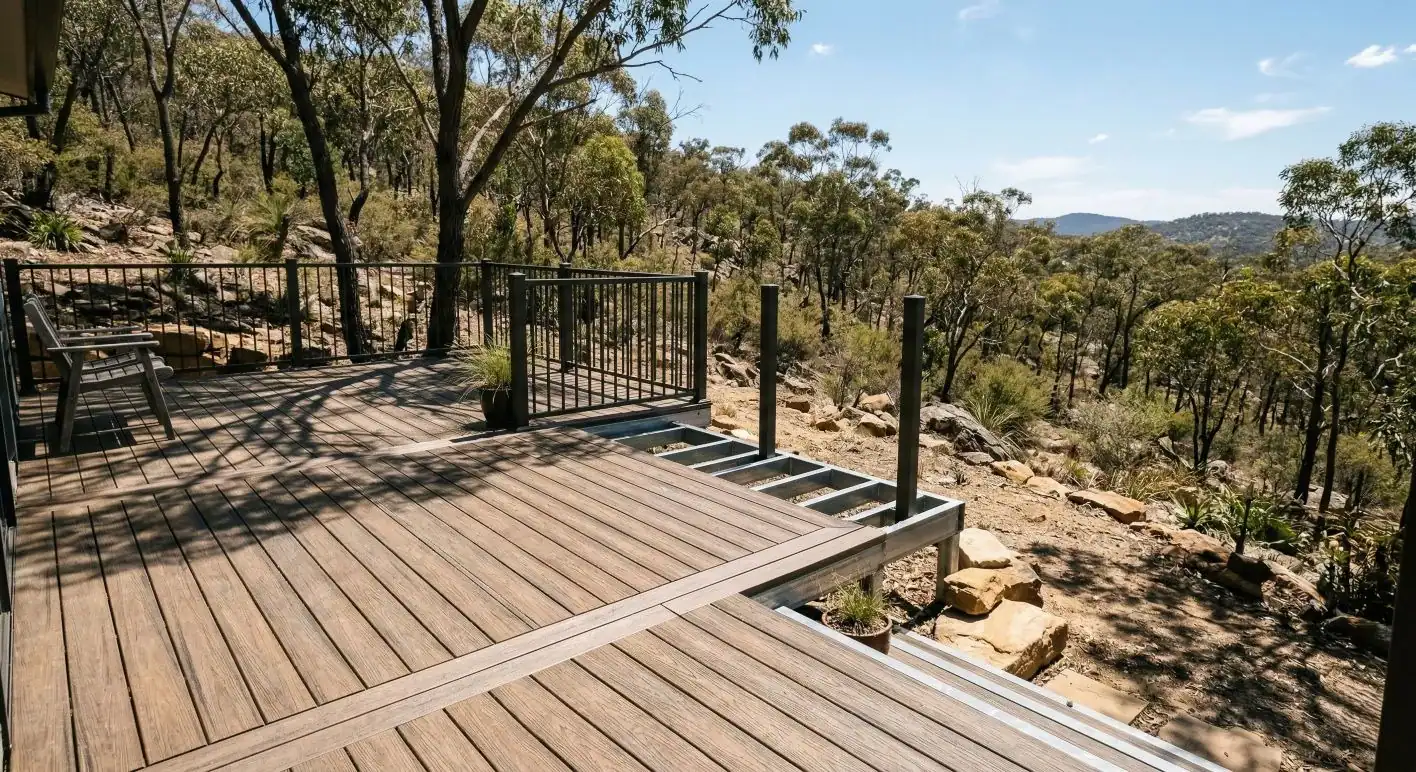
Maybe you live right on the coast. Salt spray destroys everything it touches. Or maybe you want a massive entertaining area right next to a new saltwater pool. You need to step up your game and buy cellular PVC for these wet situations.
PVC contains absolutely zero organic material. It lacks wood dust entirely. Why does this actually matter? Because wood fibres absorb moisture. Even the best capped products take on a tiny bit of water at the exposed cut ends. PVC sits submerged in a muddy puddle for a solid month and survives perfectly. It refuses to swell or grow mold.
It also dissipates heat much faster than other options. The blazing Aussie sun turns dark surfaces into a literal frying pan by midday in January. A light coloured PVC surface stays surprisingly comfortable under bare feet. It prevents those screaming kids from getting third degree burns.
4. Choose Aluminium for Bushfire Zones
A massive chunk of you live in bushfire prone areas. Modern Australian building regulations remain incredibly strict for very good reason. If your property carries a high BAL rating like BAL-40 or Flame Zone, most timber and plastic options become instantly illegal. The building inspector will take one look and fail your entire project.
Aluminium decking saves the day here. I know what you think right now. Won’t metal decking look like a cheap industrial loading dock? Not anymore. Companies powder coat solid aluminium boards with heavily textured woodgrain finishes. The boards interlock tightly together. This prevents flying embers from blowing underneath the deck structure. They provide a completely non combustible surface.
I finished a massive job up in the Blue Mountains last month using aluminium. The client terrified herself thinking it would ruin her backyard. She couldn’t believe the final result. From three metres away, it looks exactly like a high end architectural timber deck. It costs an absolute fortune, often pushing 350 dollars a square metre. But you gladly pay the price for absolute safety in the Flame Zone.
5. Make the Final Call and Relax
Stop overthinking your renovation. Your free time holds incredible value. Pick a premium capped product for a standard suburban backyard. Remember my earlier advice and buy your composite decking board from a reputable brand with a 25 year warranty. Don’t cheap out on unbranded imports.
Spend the extra cash on PVC if you build right over a pool. Bite the bullet and get aluminium if you live out in the bush.
Hire a good local builder. Force them to use proper joist tape to protect the treated pine subframe from rot. Tell them to use hidden fasteners. You want a seamless finish, not ugly screw heads catching your toes.
Then buy some comfortable outdoor furniture. Grab a cold drink. Sit down. You have a lifetime to enjoy your backyard, and absolutely zero sanding left to do.