

A home or commercial building is only as strong as the foundation beneath it. While finishes and design often get the attention, the foundation quietly carries the entire structure every single day. When built properly, it provides stability, prevents structural shifting, and protects your investment for decades.
But strong foundations don’t happen by accident. They require careful planning, soil evaluation, precise installation, and proper curing. Understanding what goes into building a solid concrete foundation can help homeowners and property owners make confident decisions before construction begins.
Understanding the Ground Beneath the Structure
Before any concrete is poured, contractors evaluate the soil conditions. Not all soil behaves the same way. Some soils expand when wet, while others shift or compress under weight. If the ground is unstable, even the strongest concrete can crack or settle unevenly.
Professional contractors may test soil density and assess drainage patterns to determine how the foundation should be designed. Proper grading and excavation ensure the area is level and capable of supporting the structure. Addressing soil conditions early prevents long-term structural problems.
Excavation and Base Preparation
Once the site is evaluated, excavation begins. Contractors dig to the appropriate depth based on building codes, load requirements, and local climate conditions. In colder regions, foundations must extend below the frost line to prevent movement caused by freezing and thawing.
After excavation, the base is compacted to reduce shifting. Gravel or crushed stone is often added to improve drainage and create a stable layer beneath the concrete. A well-prepared base distributes weight evenly and minimizes the risk of cracking over time.
Reinforcement for Structural Strength
Concrete is strong under compression, but reinforcement is necessary to handle tension and movement. Steel reinforcement bars, commonly known as rebar, are placed within the forms before pouring.
Rebar strengthens the foundation by helping distribute loads and resist cracking. In some cases, wire mesh or post-tension systems may also be used depending on the structure’s size and purpose. Proper placement and spacing of reinforcement play a critical role in long-term durability.
Pouring the Foundation with Precision
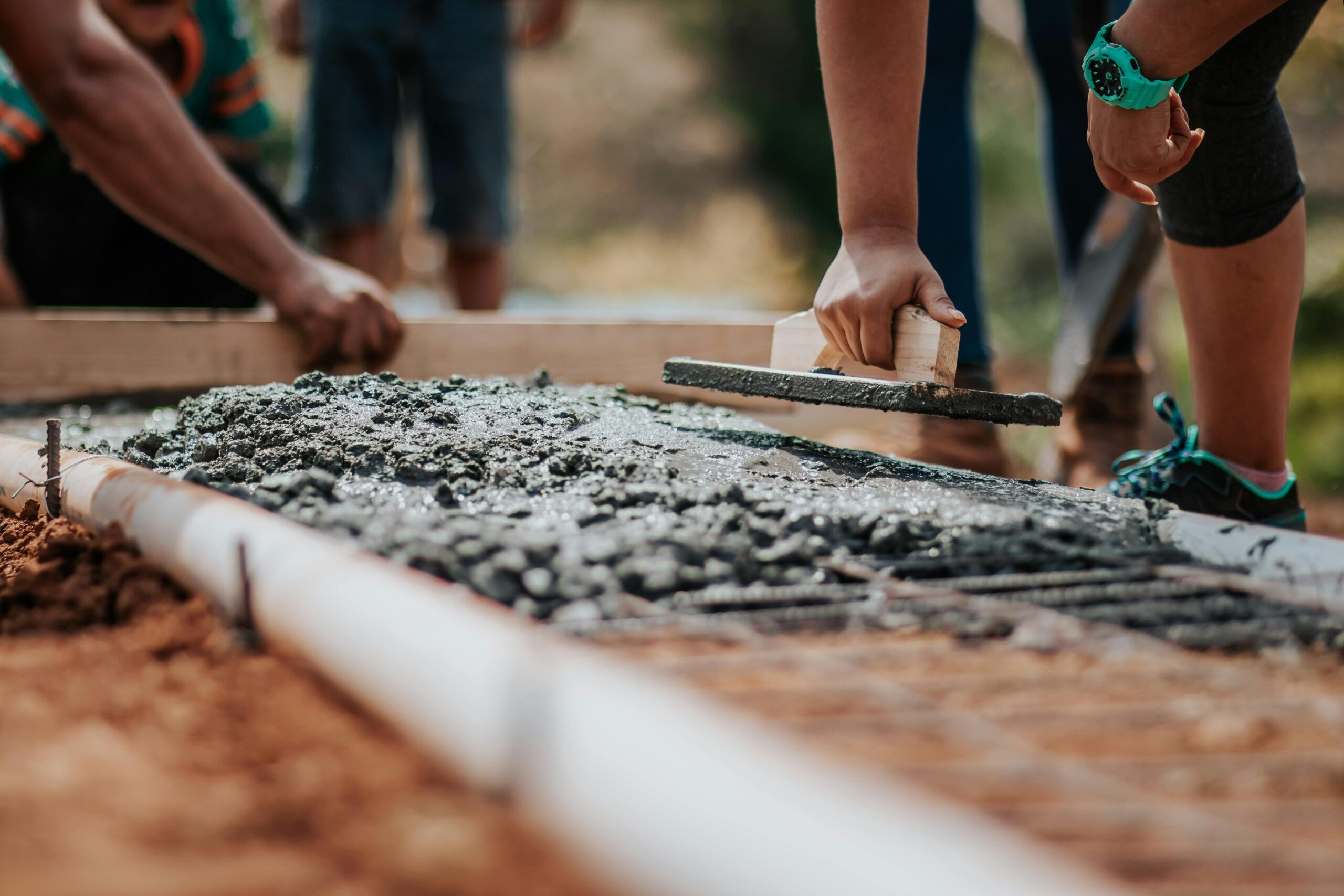
When everything is prepared, the concrete is poured into carefully built forms. Contractors ensure the mixture is placed evenly and reaches the required thickness throughout the entire foundation area.
During this stage, precision matters. The surface must be leveled correctly to support framing and future construction. Anchor bolts and other structural connectors are installed while the concrete is still workable, securing the building to its base. Careful placement during this phase ensures structural alignment from the ground up.
The Importance of Proper Curing
Concrete does not achieve full strength immediately after it is poured. Curing is the process that allows it to gradually harden and gain durability over time.
If concrete dries too quickly, it can weaken and develop surface cracks. Contractors monitor moisture levels and temperature conditions to promote steady curing. Proper curing strengthens the internal structure of the concrete and significantly improves long-term performance.
Residential vs. Commercial Foundations
Residential foundations are designed to support homes, garages, and small structures. They must handle the weight of walls, roofing systems, and daily living loads while preventing moisture intrusion and shifting.
Commercial foundations often require additional engineering due to heavier loads and larger building footprints. Warehouses, office buildings, and industrial facilities demand stronger reinforcement and more extensive planning. In both cases, experience and careful execution ensure the structure above remains stable and secure.
A strong foundation is not just about pouring concrete. It is the result of soil evaluation, precise excavation, proper reinforcement, accurate placement, and controlled curing. When each step is handled correctly, the foundation provides lasting support for everything built on top of it.
If you are planning a new build or major renovation, working with an experienced concrete contractor ensures your foundation is designed and installed to stand the test of time.