

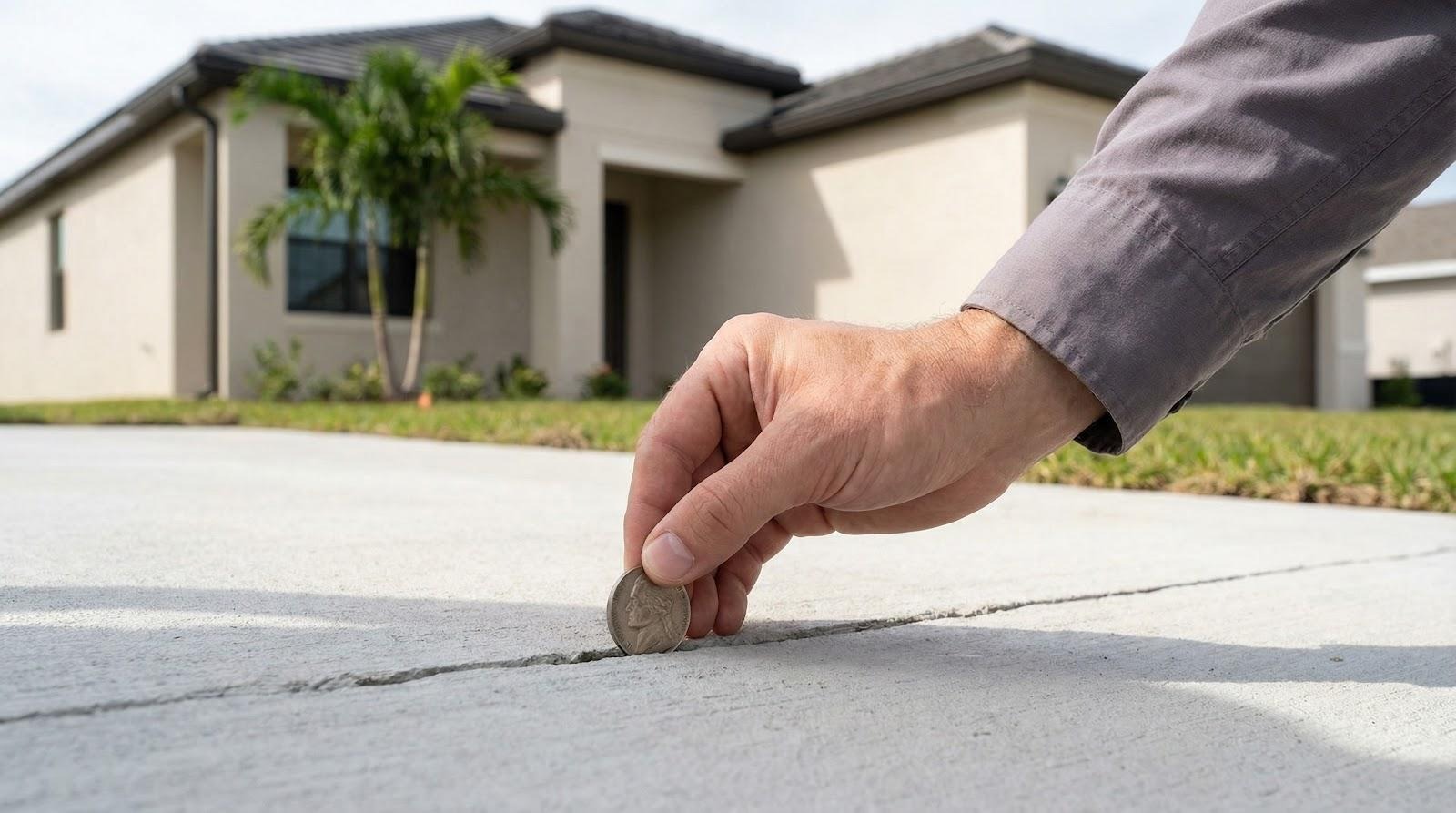
1. Structural cracks and a shifting foundation.
We start at the ground because every other problem traces back to it. Hairline shrinkage cracks are normal; anything wider than about ¹⁄₁₆-inch (roughly the thickness of a nickel) signals that the slab is moving or the soil wasn’t compacted before the pour.
Sight along the driveway and garage floor first—production crews will patch obvious fissures, but faint zig-zags often reappear. Inside, close every bedroom door. If one sticks or swings open on its own, the frame is out of square. Roll a marble across the tile; it should sit still, not race to one corner.
Florida’s sandy fill settles fast, and our high water table adds buoyancy below. Fixing movement later means underpinning piers and epoxy injections—repairs that can exceed $15,000 and never show up on the sales flyer.
See meaningful cracks? Press pause and call an independent structural engineer while you still control the closing date.
2. Water anywhere it shouldn’t be.
Moisture is merciless in Florida. A single pinhole leak can breed a wall of mold before your first power bill arrives.
Start with your senses. Step inside and breathe; any musty hint on new drywall is a siren. Scan ceilings and window corners for faint coffee-colored halos. Rub a finger along baseboards—swelling paint means water traveled that path recently.
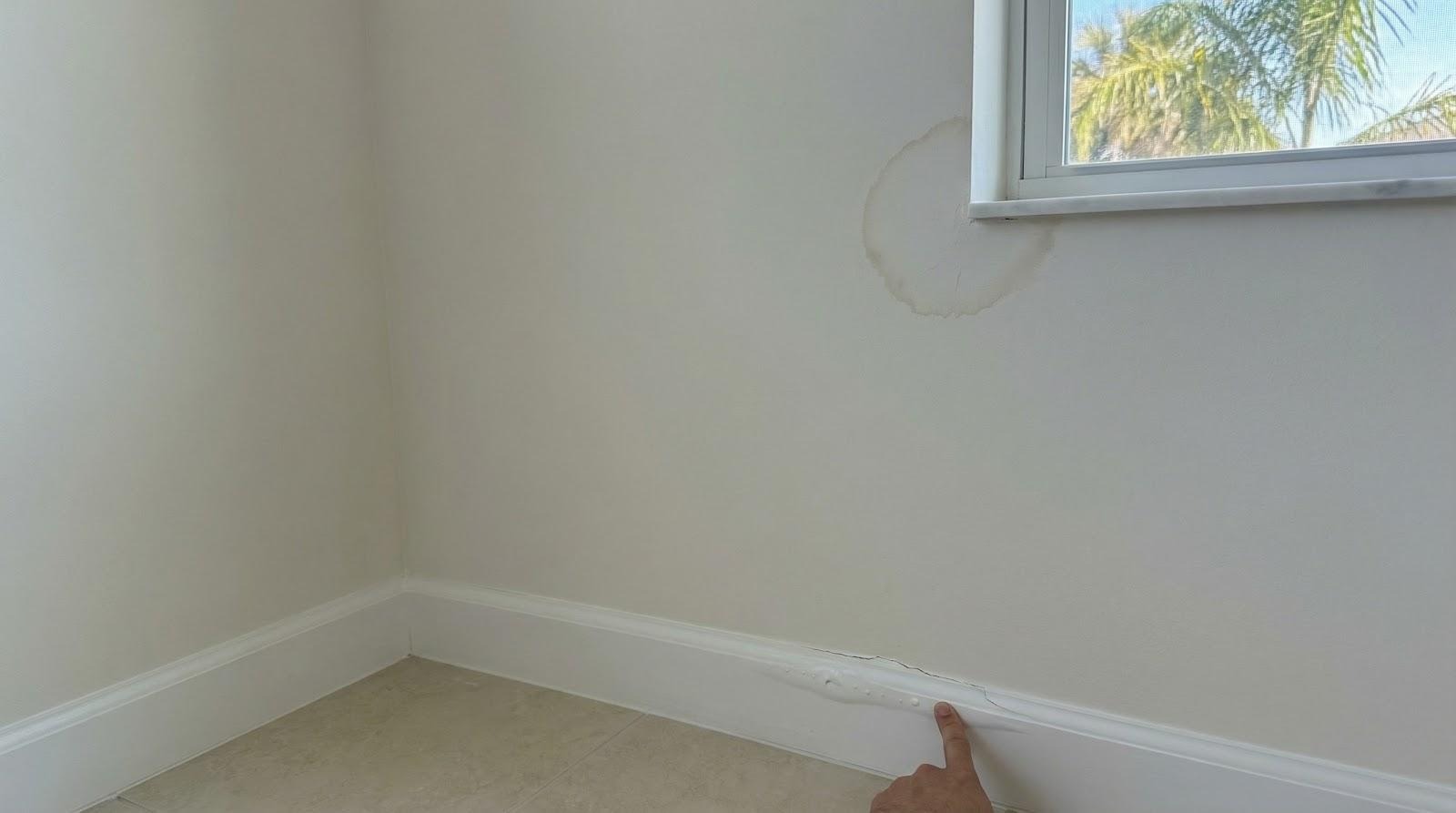
Next, act like the rain. Hose the exterior for five steady minutes, then head to the attic. Damp insulation or shiny nail tips show the roof skin is failing. Under sinks, open the shut-off valves and run hot water; even a slow drip foretells swollen cabinets and warped floors.
Florida storms push water sideways. Stucco must keep clean caulk lines and visible weep screeds at least two inches above grade to defend the envelope. If you spot missing sealant or stucco buried in mulch, write it down in bold ink. Moisture ignored today becomes an insurance claim tomorrow.
When in doubt, bring a moisture meter and trust the numbers. Readings should stay below 15 percent on drywall and framing. Mold remediation can top $10,000 to $30,000, so zero moisture at closing protects both your air and your budget.
3. Missing hurricane hardware and impact protection.
Wind is Florida’s ultimate stress test. When the forecast warns of triple-digit gusts, your roof, windows, and garage door must act as a single shield. Any weak link breaks the chain.
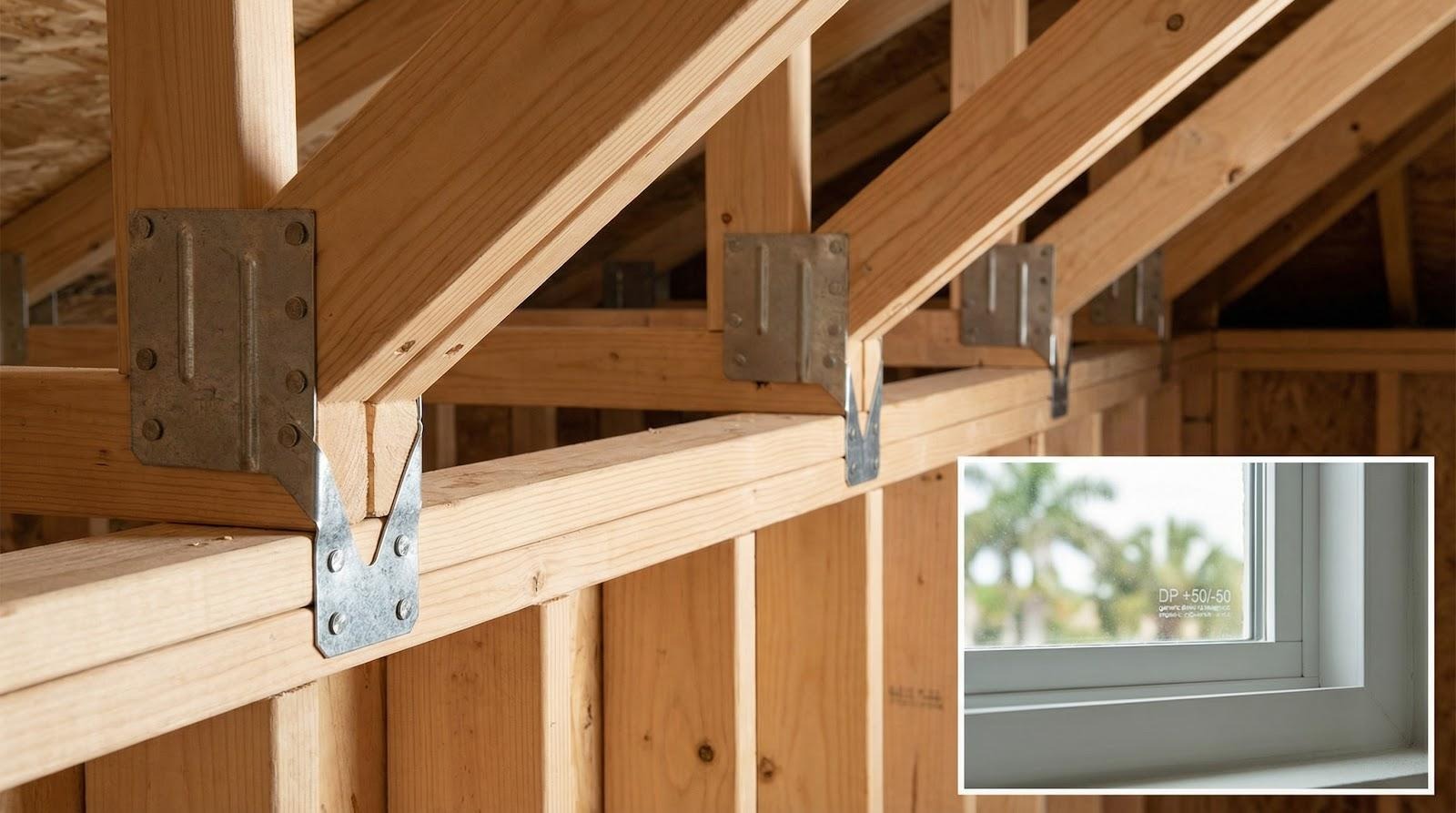
Climb into the attic with a flashlight. You should see shiny metal clips or straps hugging every truss to the top plate, each secured with at least three nails. No metal means the roof can lift like a lid when pressure builds.
Back outside, inspect the glass. Impact-rated windows carry a small etched code such as “DP +50/-50.” If you cannot find it, ask for the compliance affidavit or the storm panels that code permits instead of reinforced glass. Apply the same scrutiny to the garage door: a wind-rated label confirms it can resist the inward pressure that often blows doors off their tracks.
Florida building code has required hurricane shutters or impact-rated glass on every exterior opening since July 2001. SquareFoot Homes’ cost analysis shows installing shutters that meet the standard averages about $497 per window, while replacing a single broken impact window runs roughly $850. Their statewide listings let buyers view available homes already equipped with storm-rated glass, providing real numbers you can weigh against upgrade quotes.

SquareFoot Homes Florida New Construction Listings with Storm-Rated Glass
Those numbers explain why checking for the etched DP rating—or demanding compliant shutters—belongs high on your pre-closing checklist.
These safeguards do more than satisfy code. Homes with verified clips, impact windows, and a rated door can trim wind-storm insurance premiums by 8 to 25 percent, according to the Florida Office of Insurance Regulation. More critically, they keep debris from turning your living room into an open porch.
If the builder skimps here, pause negotiations until your inspector confirms every strap, clip, and label.
4. Poor drainage or grading around the home.
Rain in Florida behaves like an express-lane flood. A summer cloudburst can drop inches in minutes, and gravity moves that water straight to your slab.
Walk the perimeter after a shower, or create your own test with a garden hose. Soil should slope away from the foundation in every direction, falling at least 0.5 inch per foot for the first five feet. If mulch touches the stucco or water pools against the wall, you are staring at an unplanned moat.
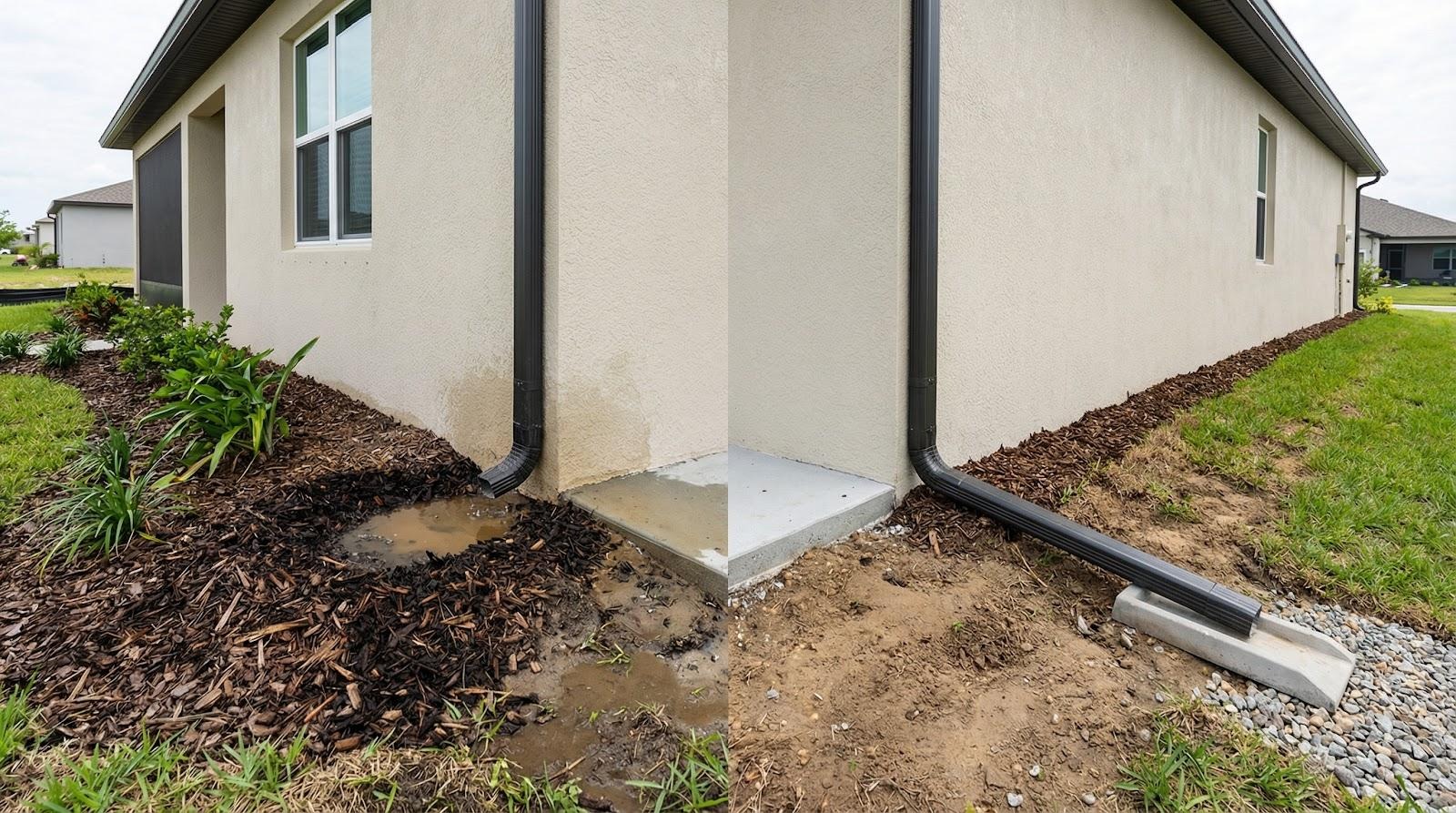
Flat yards feel friendly until the grass still squishes hours after the storm has passed. Standing water seeps into block walls, wicks up framing, and invites termites to dinner. Inside, that moisture shows up as peeling baseboards and warped flooring long after the builder’s warranty closes.
Downspouts need extensions or splash blocks that push runoff at least three feet from the house. Without them, roof water pounds one spot, trenches form, and hydrostatic pressure builds against the wall. Over time the slab loses support and structural cracks follow.
Good drainage is simple earthwork and cheapest before sod goes down. A French drain or re-grading averages $25 – $35 per linear foot, while mold remediation caused by chronic dampness can exceed $15,000. Always follow the water; the house will reveal whether the builder respected the terrain.
5. Sloppy workmanship that repeats room after room.
Finish work is your first glimpse into a builder’s discipline. One crooked hinge happens; a pattern of ⅛-inch gaps, lopsided tiles, or wavy baseboards signals corner-cutting.
Walk each room slowly with every light on. Grout lines should track like graph paper, not wander. Trim joints need tight, clean caulk, not smeared filler. Open and close every interior door; if three or more stick or rub the jamb, the framing crew rushed its layout, and that haste probably reached areas you cannot see.
Consistency is the tell. A flawless foyer paired with a sloppy guest bath means the punch list was cosmetic, not comprehensive. Good builders correct defects until every room matches. Rushed crews mark only what jumps out at first glance.
Surface fixes cost little now but plenty later. Re-tiling can run $10 to $20 per square foot, and repainting to hide poor caulk adds hundreds more. Use these clues as leverage before closing; a builder who skips precision on visible finishes likely missed accuracy behind the drywall too.
6. An HVAC system that can’t tame Florida humidity.
Step into the living room and listen. The air-handler should murmur, not roar. More important, it must run long enough to wring moisture from the air. Short, frantic cycles under 10 minutes mean the unit is oversized; that leaves rooms clammy, drives mold into closets, and adds dollars to every power bill.
Feel each supply vent. Airflow should stay even from front door to back bedroom. A warm guest room signals crushed ductwork or missing attic insulation. Pull the return filter; if it is caked with drywall dust on day one, the crew ran the system before cleanup and that grit now hides on the coil.
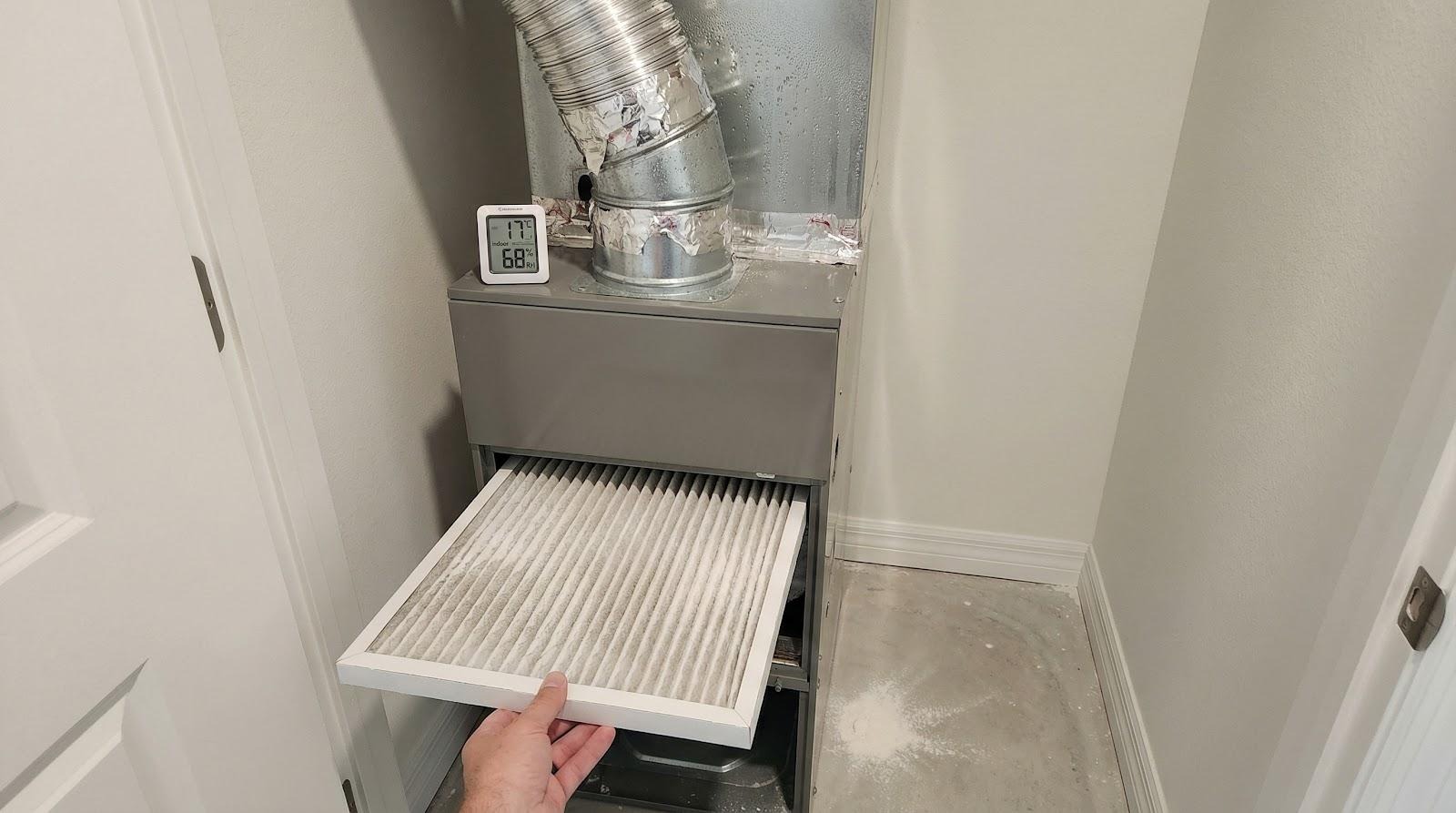
Florida code requires sealed ducts and a minimum SEER 2 rating of 15.2 for new heat pumps. Yet inspectors still find open plenums and loose flex lines. Those leaks send paid-for cold air into the attic while humid attic air seeps inside. Sealing after drywall goes up can cost $1,000 to $2,500, far more than a ten-minute tape job during rough-in.
Ask for the Manual J calculation that sized the equipment. Reputable builders share it without blinking. Then lower the thermostat five degrees. The house should cool smoothly, not drop to 70 °F and shut off coated in condensation. Indoor humidity should settle between 45 and 55 percent; your lungs notice first, and so will your wallet.
7. Electrical shortcuts that threaten safety.
Electricity is invisible until it sparks trouble. A brand-new panel should be a model of order: breakers labeled, no twin wires crammed under one lug, knock-out holes sealed. Open the door and look. Sloppy wiring here hints at speed over safety everywhere else.
Carry a ten-dollar outlet tester in your pocket. Plug it into kitchen, bath, garage, or patio outlets (all wet-zone circuits). The lights should read “correct.” A miswire or a GFCI that refuses to trip within 0.03 second is a fix-or-walk issue; shocks and fires wait for no warranty.
Flip wall switches. Dead fixtures expose loose connections hiding in ceiling boxes. In the attic, look for yellow wirenuts inside covered junctions, not bare splices dangling in open air. Every missing cover plate signals that the finish crew raced the clock.
Rewiring a main panel can cost $2,500 – $4,000, and replacing fire-damaged framing costs far more. Good builders invite an electrician’s double-check because clean power protects their reputation. If management shrugs off defects as “easy punch-list stuff,” imagine how they treated the hidden joints you cannot see. Require correction in writing before closing so your future self can sleep with the lights off.
8. Termite and pest protection that’s missing in action.
In Florida, wood becomes breakfast if you leave it unguarded. Every new build should include recorded soil treatment or bait-station paperwork and at least a one-year termite bond. Skip that, and silent destruction can start before the paint dries.
Check the garage wall for a small plastic placard. It should list the chemical used, treatment date, and company phone number. No tag, no proof. Ask the superintendent; evasive answers signal a red flag.
Walk the exterior. Stucco or siding must stop a minimum of three inches above grade so the concrete slab stays visible. When landscapers bury that joint under mulch, termites cross beneath the radar into framing. Seal any opening wider than ¼ inch where pipes or cables enter; those gaps invite ants and roaches.
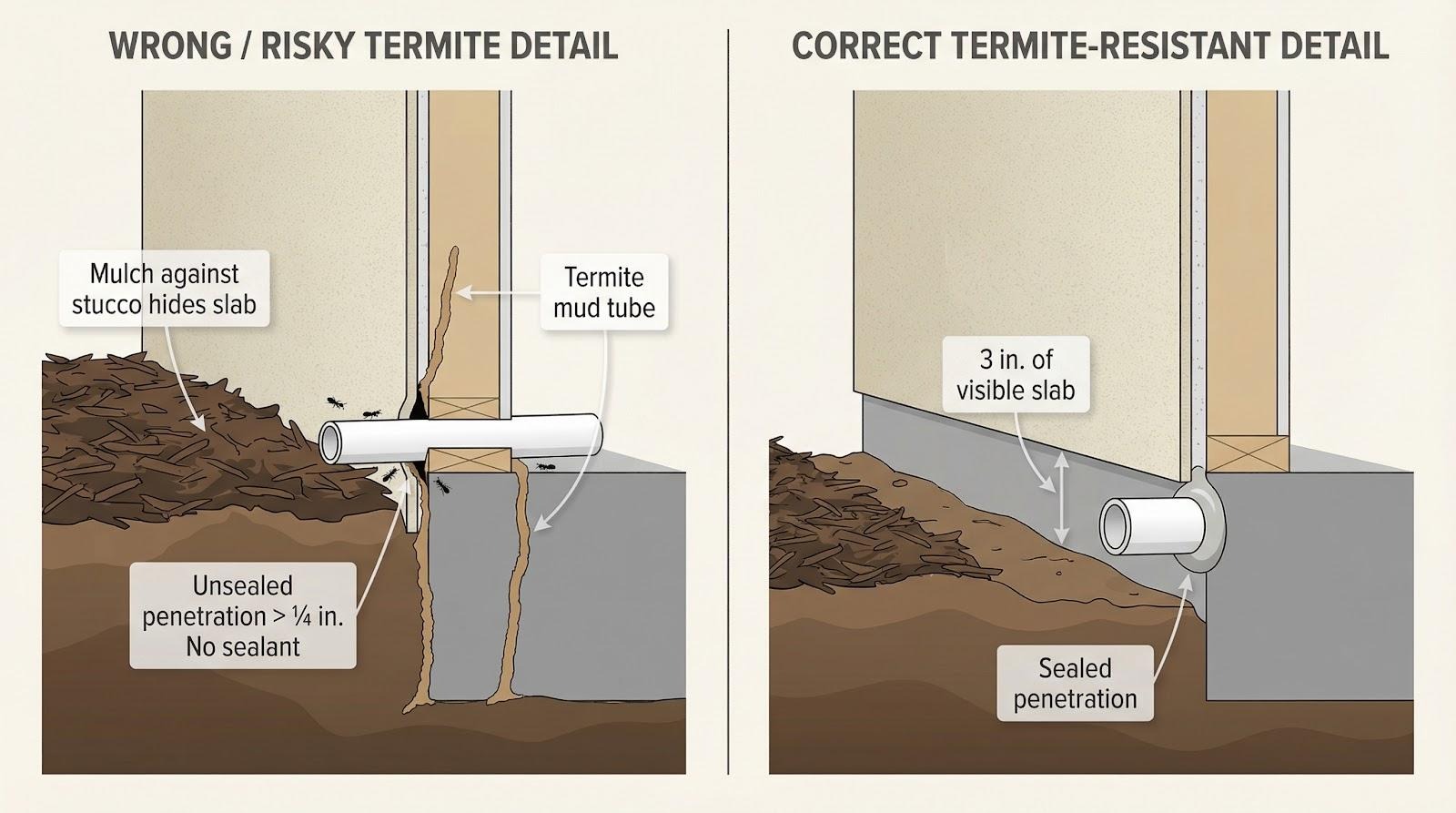
Concrete block on the first floor and metal studs above slow the bugs, but if your model is wood framing top to bottom, pretreatment is non-negotiable. A full perimeter treatment averages $400 to $800, while repairing termite damage can climb past $7,500. Get documentation in writing and renew the bond each year. Protect the shell now, and you avoid paying for a new skeleton later.
9. A builder who blocks thorough inspections.
Transparency separates trusted craftspeople from corner cutters. Good builders welcome extra eyes; bad ones rely on delay, distraction, or outright bans.
Ask early for a pre-drywall walkthrough with your own inspector. If the sales rep stalls with lines like “We handle inspections, outside pros just slow us down,” consider that a siren. Municipal inspectors often spend 7 to 15 minutes per phase. Private inspectors linger for 90 minutes or more, probing and photographing what drywall will soon hide.
During the final walk, watch the attitude. Does the superintendent welcome blue tape on blemishes and jot every note, or dismiss concerns with “normal” and “we’ll get to it”? Deflection today predicts warranty wrestling tomorrow.
Next, study the contract. Clauses that limit inspection time to one hour, forbid ladder use, or ban attic entry read like magician’s fine print: look here, not there. Push back in writing or be ready to gamble on unseen work.
A full third-party inspection package costs $300 to $500 and can uncover defects that later demand tens of thousands in repairs. We buy peace of mind, not just square footage. If a builder treats scrutiny as an insult, keep your earnest money fluid; you may need it for a different address.
10. A warranty that disappears when you need it.
The ink on closing papers dries fast. That speed turns into a trap if the attached warranty is thin, vague, or packed with exclusions.
Read every line before you sign. A strong new-home warranty covers workmanship for one year, systems such as plumbing and HVAC for two years, and structural elements for ten years. Anything shorter starts a countdown that will expire before major problems show up.
Hunt for “as-is” or arbitration clauses hidden mid-paragraph. An “as-is” sale shifts risk to you on day one. Arbitration can still work, but only when the warranty lists clear remedies and response times. Vague promises backed by a post-office-box insurer lead to endless phone trees when a slab crack widens in year three.
Florida trimmed the window to file construction-defect claims from ten years to seven. The clock starts when the permit closes, not when you unpack boxes. A weak warranty plus a shorter legal runway leaves homeowners paying out of pocket.
Legal help to fight a denied claim can cost $250 to $400 per hour, and structural repairs often run $20,000 or more. Ask the sales agent for the complete policy, not just a brochure. If they stall, treat the silence as a preview of future service. You are buying peace of mind; make sure the paperwork matches the promise.
How to inspect a brand-new house like a pro.
You have the red-flag list; now turn knowledge into action. Think of the walkthrough as a dress rehearsal for move-in day: everything should perform on cue.
Schedule two private inspections: one before drywall and one about seven days before closing. The pre-drywall visit lets your inspector photograph wiring, plumbing, and truss connectors while fixes are still low-cost screws, not surgical cuts. The final inspection confirms nothing slipped between phases and usually costs $300 to $500 for an average-size home.
Arrive prepared, not empty-handed. A flashlight, outlet tester, painter’s tape, marble, and notebook all fit in a small tote yet reveal big truths. As you move room to room, tag issues with tape so the builder sees exactly what needs attention. Write every promise next to the tape color; memory fades, paper endures.
Run the systems as if you already live there. Fill tubs, fire up appliances, drop the thermostat 5 °F, and open every window. Water should drain, breakers stay silent, and air should flow cool and dry. Treat the house as a machine under warranty because that is exactly what it is.
Finally, slow down. Give yourself at least two quiet hours. Quality hides in corners that quick walks miss. A patient eye today saves frantic calls tomorrow.