
Pasadena, MD, sees its share of summer storms, and with them comes the threat of lightning strikes to trees. It happens often without warning. A once-healthy tree can suddenly split, lean, or lose its bark after a strike. The real problem? Deciding whether to save or remove it.
Not all lightning-damaged trees are doomed. Some pose a safety risk and must be removed. But others can recover with care if they still have live leaves, stripped partially, or there are no major structural damages. Excessive leaning, significant bark loss, and fungus growth says it cannot be saved.
This guide will help you identify serious warning signs that call for immediate removal. You can know the signs that suggest your tree might survive with some help from tree service professionals.
When Do You Need to Remove A Lighting Damage Tree?
Sometimes, removing lightning-struck trees is your safest choice. Electrical damage can create a serious risk for your family and property. Here are the clear warning signs that mean removal is necessary.
The Tree Is Leaning or Has Major Structural Damage
A bolt can crack the trunk or damage the root system badly. This makes the tree unstable and dangerous to keep. Trees that lean toward your house or power lines create extra risk.
Electrical lines and tilting trees are a deadly combination. The next storm could send it crashing down. Your safety comes first when structural damage is visible.
Lightning Has Split the Trunk Deeply
If you can see daylight through the trunk, the tree won’t survive. Deep splits from a lightning strike mean the tree has lost its strength. Electricity travels through the trunk and splits it open completely.
The tree’s support system is broken beyond repair. Fire damage often happens inside these deep cracks, too. Trees with major trunk splits always need immediate removal.
Significant Bark Loss on All Sides
Bark works like the tree’s blood vessels and skin combined. When lightning removes bark from multiple sides, circulation stops completely. The tree can’t move moisture and food through its system anymore.
This circulatory failure means slow death for the entire tree. Electrical damage this severe never heals properly over time.
Fungus or Rot Appears Weeks After the Strike
Lightning damage often shows up weeks later as decay problems. Electricity kills internal tissue and reduces natural moisture levels inside. It creates perfect conditions for fungus and rot to spread.
The root system starts failing as the infection moves downward. Once rot begins, it spreads quickly through the weakened tree.
When Is It Safe to Keep a Lightning-Struck Tree?
Many trees can survive lightning damage. Tree service professionals often help these trees recover completely. Here’s when your tree might make it through.
The Tree Still Has Live Leaves
Green leaves mean the tree’s life system still works after the strike. Look for thick leaf coverage across most branches in your area. New buds growing on branches show the tree wants to live.
Future storms won’t hurt healthy branches much. Dense canopy growth means the damage wasn’t too severe. Trees with lots of live leaves usually recover well.
Bark Is Only Partially Stripped
Small bark strips can heal if most bark stays attached. Experts can apply wound dressing to protect exposed wood. Regular monitoring helps catch any problems that get worse over time.
Partial bark loss doesn’t always mean tree removal is needed. The remaining bark can grow over the wounds successfully. Safety comes from watching the healing process closely.
No Major Structural Cracks or Splits
Trees without big cracks can stay standing safely for years. Small surface marks don’t affect the tree’s strength or stability. Bracing or cabling can support weak spots from wind loads.
Professionals know which trees need extra support systems. Strong trunks can handle rain and storm conditions without falling. Structural soundness means the tree poses no risk.
Tree Species with High Recovery Potential
Different species respond differently to electrical strikes. Oak trees bounce back better than most species around here. Sycamores also handle lightning strikes more often than other types. Pine trees struggle to recover and usually need removal.
Some trees naturally resist thunderstorm events better than others. Depending on the tree, it can affect the recovery time.
How to Detect a Lightning-Affected Tree?
Trees show clear signs after lightning events. You can spot the damage even without witnessing it.
- Burnt or blackened bark patches.
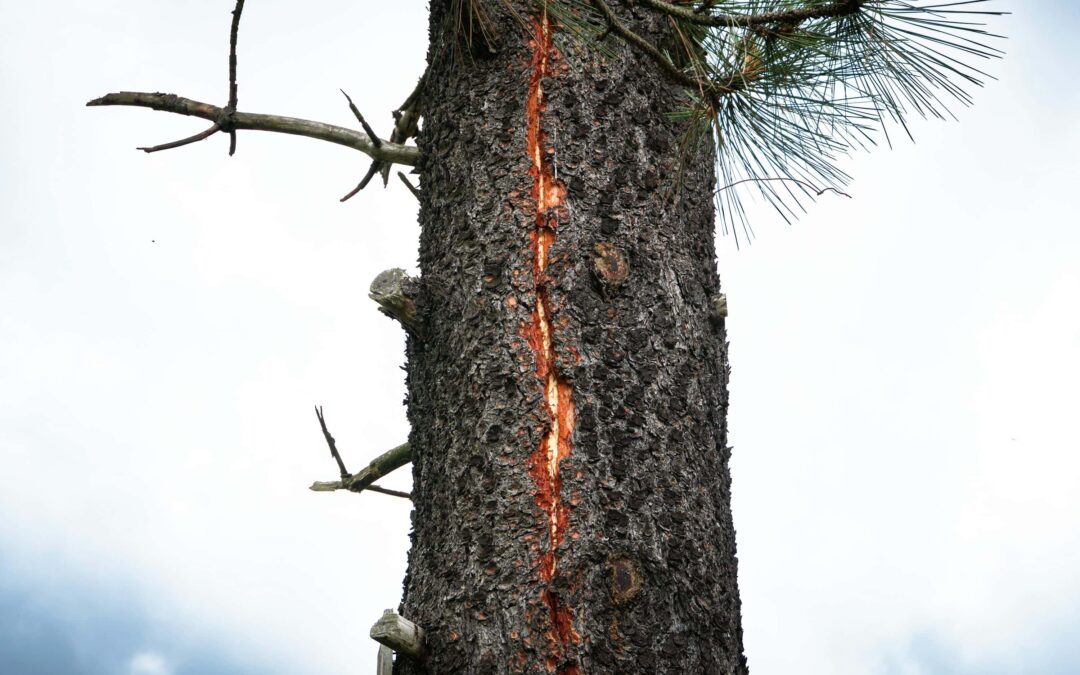
- Zigzag scorch marks down the trunk.
- Missing bark strips or chunks.
- Split or cracked trunk sections.
- Dead branches on one side.
- Wilted leaves despite good weather.
- Scattered wood pieces around the base.
- Strange burn marks near roots.
Frequently Asked Questions
Does insurance cover trees struck by lightning?
Homeowners’ insurance often covers trees struck by lightning, especially if they damage your home or other structures. Check your policy details to confirm coverage for tree removal and related repairs.
What does lightning damage do to trees?
Lightning can split tree trunks, burn bark, and damage roots. Some trees die quickly, while others decline slowly. Even if a tree looks fine, internal damage may make it unsafe or more likely to fall.
How to protect trees from lightning?
Install a lightning protection system on valuable or tall trees. Keep trees healthy with regular care. You should prune weak branches and monitor for signs of stress, which make trees more vulnerable to lightning damage.
Recent Comments